Feel free to share!
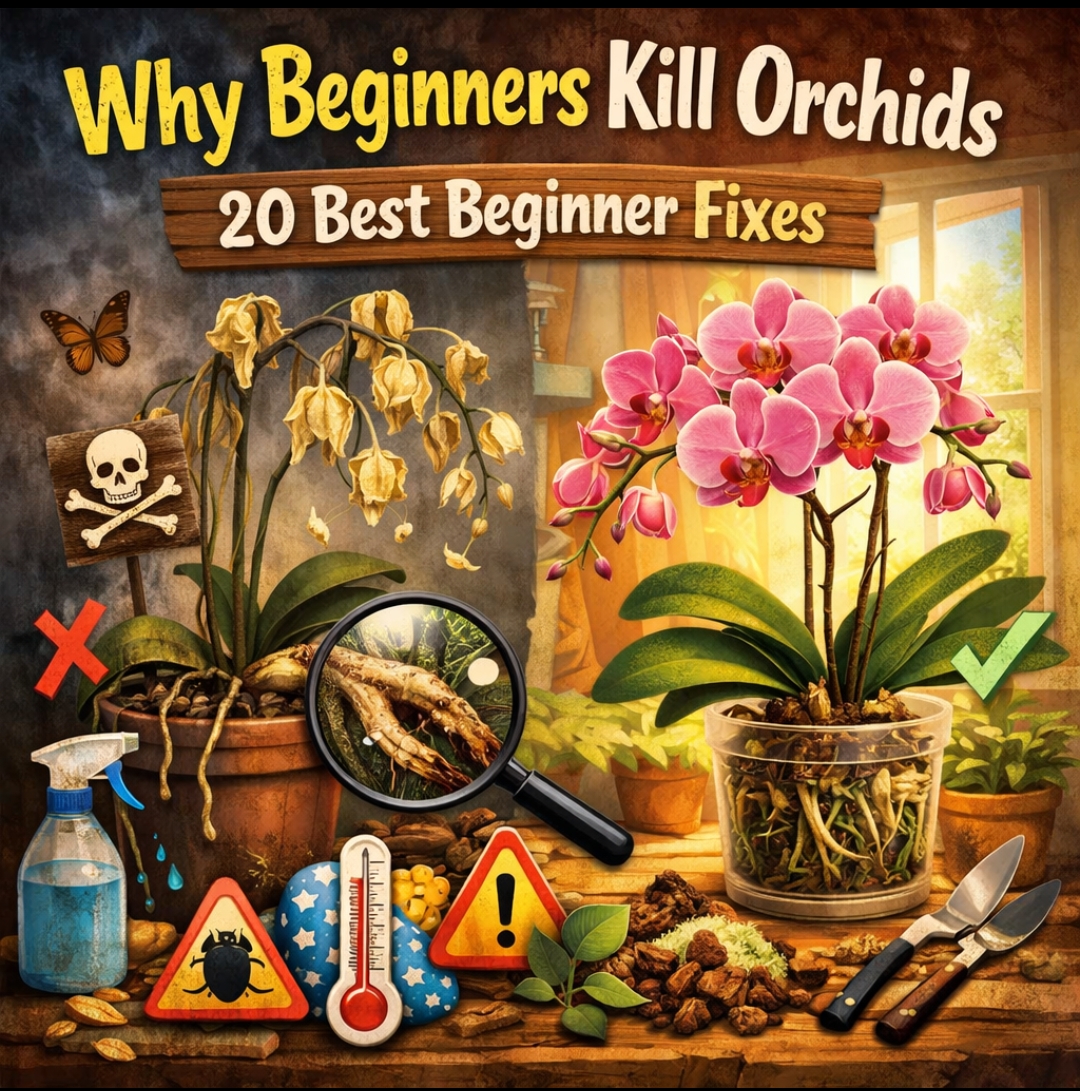
Orchids are often labeled as “difficult plants,” but in reality, they are not fragile at all. The real problem is misunderstanding how they grow in nature. Orchids don’t die easily—wrong care kills them. When beginners treat orchids like regular houseplants, problems begin.
Table of Contents 👈 Tap Here
This guide reveals the 20 most common beginner mistakes and the practical fixes that can transform struggling orchids into long-lasting, blooming plants—even if you’ve failed before.
1. Overwatering Orchids
Overwatering is the number one reason beginners kill orchids. Many people assume orchids need frequent watering because they look delicate, but their roots actually need air as much as water. Constant moisture leads to root rot, suffocating the plant from below.
Fix: Always check the roots and potting mix before watering. Water only when roots turn silvery and the medium feels dry. Less is better than more.
2. Using the Wrong Potting Mix
Planting orchids in regular garden soil is like putting a fish in sand instead of water—it simply cannot survive. Soil retains too much moisture and blocks airflow around roots. Orchids in nature grow attached to trees, not buried in soil.
Fix: Use airy orchid mixes such as bark, sphagnum moss, or coconut husk that allow roots to breathe and drain freely.
3. Poor Drainage
Even with the right potting mix, orchids will fail if excess water cannot escape. Standing water quickly leads to root decay and fungal disease. Many decorative pots look beautiful but trap water at the bottom.
Fix: Always choose pots with multiple drainage holes. Clear orchid pots are ideal because they let you monitor root health and moisture easily.
4. Lack of Proper Light
Light is essential for orchids to grow and bloom, yet many beginners place them in dark corners or deep inside rooms. Too little light results in lush leaves but no flowers, while too much light burns foliage.
Fix: Place orchids near bright windows with indirect light, especially east-facing windows where morning sun is gentle and beneficial.
5. Direct Harsh Sunlight
Although orchids need light, direct midday sun can scorch their leaves quickly. Sunburn appears as yellow or brown patches that never recover, permanently damaging the plant’s appearance and health.
Fix: Protect orchids with sheer curtains or filtered light. If the sun feels hot on your hand, it is too strong for your orchid’s leaves.
6. Ignoring Root Health
Many beginners focus only on leaves and flowers while ignoring roots, yet roots are the true lifeline of orchids. Healthy roots absorb water, nutrients, and oxygen efficiently.
Fix: Inspect roots regularly. Healthy roots are firm and green or silvery. Remove only soft, black, or hollow roots to prevent disease spread and encourage new growth.
7. Incorrect Water Type
The type of water you use matters more than most beginners realize. Hard water and chlorine can build up salts in the potting mix, slowly damaging orchid roots and blocking nutrient absorption.
Fix: Use rainwater, filtered water, or allow tap water to sit overnight before watering. This reduces harmful chemicals and keeps orchids healthier long-term.
8. Overflowing
Beginners often believe feeding orchids heavily will make them grow faster or bloom more. In reality, too much fertilizer burns delicate roots and causes leaf damage instead.
Fix: Use a weak fertilizer solution regularly rather than strong doses occasionally. A diluted orchid fertilizer applied every 1–2 weeks during growth is ideal for beginners.
9. Never Fertilizing
On the other side of the problem, some beginners never fertilize at all, assuming orchids don’t need nutrients. Over time, this leads to weak growth, pale leaves, and failure to bloom.
Fix: Feed orchids lightly but consistently using a balanced orchid fertilizer. This ensures steady, healthy growth and supports future flowering cycles.
10. Wrong Temperature Exposure
Orchids are sensitive to extreme temperatures. Sudden heat or cold can shock them, causing bud drop, leaf damage, or slowed growth.
Fix: Keep orchids between 18–30°C (65–85°F) and away from heaters, air conditioners, and cold drafts. Stable temperatures help orchids thrive comfortably.
11. Low Humidity
Orchids originate from humid tropical environments, so dry indoor air can stress them significantly. Low humidity causes wrinkled leaves, slow growth, and buds falling off before opening.
Fix: Increase humidity with pebble trays, grouping plants together, or light misting. Even small humidity improvements make a big difference.
12. Not Repotting When Needed
Over time, orchid potting media breaks down and becomes compact, reducing airflow and trapping moisture. This suffocates roots and encourages disease.
Fix: Repot orchids every 1–2 years or when the potting mix looks soggy, decomposed, or smells bad. Fresh media restores healthy root conditions.
13. Repotting at the Wrong Time
Repotting during blooming is one of the most stressful things you can do to an orchid. It often leads to flower loss and growth setbacks.
Fix: Always wait until flowering finishes or when new root growth appears. This allows the orchid to recover quickly and resume healthy development.
14. Cutting Healthy Roots
Many beginners accidentally cut healthy roots while trying to “clean up” their orchids. This weakens the plant and slows recovery.
Fix: Only trim roots that are black, mushy, or hollow. Healthy roots should always be preserved, as they are vital for water and nutrient absorption.
15. Ignoring Pest Problems
Small pests like mealybugs, spider mites, and aphids can multiply quickly if unnoticed. Early infestations often look harmless but soon damage leaves and roots.
Fix: Inspect orchids weekly, especially under leaves and near joints. Use neem oil or insecticidal soap early to stop pests before they spread.
16. Not Cleaning Tools
Using dirty scissors or pruners transfers diseases from one plant to another. Many orchid infections begin this way without beginners realizing it.
Fix: Always sterilize tools with alcohol or flame before trimming roots or stems. This simple habit prevents serious disease outbreaks.
17. Poor Air Circulation
Still, stagnant air encourages fungal and bacterial problems, especially in humid environments. Orchids need gentle airflow to stay healthy.
Fix: Ensure orchids are in a well-ventilated area with soft air movement, but avoid placing them directly in front of fans or drafts.
18. Expecting Flowers All the Time
Orchids are not meant to stay in bloom year-round. Many beginners assume a plant is failing when flowers drop, but this is simply part of its natural rhythm.
Fix: Understand orchid blooming patterns. A healthy orchid rests after flowering, building strength before producing its next stunning round of blooms.
19. Worrying About Normal Leaf Drop
A yellowing leaf doesn’t always signal disaster. Orchids regularly lose older leaves as they grow and renew themselves.
Fix: If only the lowest leaves slowly turn yellow, it’s usually harmless. But if several leaves fade at once, check your lighting, watering habits, and root health.
20. Quitting Too Quickly
Many new growers give up after one setback, thinking orchids are too difficult. In truth, orchids are tougher than they look when cared for consistently.
Fix: Stay patient and watch how your plant reacts to small changes. With steady care, most orchids bounce back and often bloom even more beautifully than before.
Conclusion
Orchids aren’t delicate—they’re simply often misunderstood.
Once these beginner errors are corrected, orchids become some of the most satisfying and long-lasting houseplants you can enjoy
FAQS
1. Why do orchids seem difficult for beginners to grow?
Orchids appear difficult mainly because their care needs differ from common houseplants. They don’t grow in soil, dislike standing water, and need specific light conditions. When beginners treat them like regular potted plants, problems arise. With the right understanding, orchids are actually hardy and long-living plants.
2. Is overwatering the biggest mistake orchid beginners make?
Indeed, the most frequent reason for orchid failure is overwatering. Air circulation and short drying times are necessary for orchid roots. Roots that are always damp decay fast, depriving them of oxygen and nourishment. This is a crucial lesson for novice gardeners because understanding when not to water is just as vital as knowing when to do so.
3. Can orchids survive if planted in regular garden soil?
No, garden soil suffocates orchid roots because it holds too much moisture and lacks airflow. Orchids are epiphytes in nature, growing on trees, not in soil. They need loose bark-based mixes to thrive. Using soil often leads to root rot and slow decline even if the leaves look healthy at first.
4. How much sunlight do orchids actually need?
Orchids need bright, indirect light rather than harsh direct sun. Too little light prevents flowering, while too much sun scorches leaves. A window with filtered light or sheer curtains is ideal. Understanding light balance helps orchids bloom regularly instead of just surviving with green leaves alone.
5. Why do orchid leaves turn yellow?
Yellow leaves often signal stress from overwatering, poor drainage, or excessive sunlight. Sometimes it’s natural aging of lower leaves, but widespread yellowing usually points to a care issue. Observing leaf patterns and recent changes in care helps identify whether the problem is environmental or routine aging.
6. Should orchids be misted daily?
Daily misting is usually unnecessary and can even promote fungal diseases if water sits on leaves or crown. Orchids prefer humidity around them, not soaked foliage. Using a humidity tray or placing plants near others is a safer way to maintain moisture without increasing the risk of rot or infection.
7. Why do orchid buds fall off before blooming?
Bud drop often happens due to sudden changes in temperature, light, or humidity. Drafts, moving the plant, or exposure to cold air can shock orchids into dropping buds. Stability is essential during the flowering stage to ensure buds mature into long-lasting blooms.
8. How often should orchids be watered?
Watering frequency depends on climate, potting mix, and pot type. Generally, once every 7–10 days works for most indoor orchids. Always check the roots or mix before watering. Dry is safer than constantly wet, as orchids tolerate brief dryness far better than soggy conditions
.
9. Why is proper drainage so important for orchids?
Without drainage holes, water collects at the bottom of the pot and suffocates roots. Orchids need excess water to escape quickly. Even perfect watering habits fail if drainage is poor, making pot selection just as critical as choosing the right potting medium.
10. Can orchids grow well indoors?
Yes, orchids can thrive indoors if placed correctly. They need bright indirect light, airflow, and moderate humidity. Many orchids actually prefer indoor conditions because they are protected from extreme weather. With basic adjustments, orchids become excellent long-term indoor plants rather than fragile showpieces.
11. Why do orchids stop flowering after the first bloom?
Orchids focus on leaf and root growth during their rest phase after flowering. This isn’t an indication of failure; it’s natural. The majority of orchids rebloom every year with the right light, food, and patience. Insufficient light or nutrients are typically indicated by a lack of reblooming.
12. Should orchids be fertilized often?
Orchids need light but regular feeding, usually once every 2–3 weeks with diluted fertilizer. Overfertilizing burns roots and leaves, while underfeeding limits growth and blooms. A “weakly, weekly” approach is popular, ensuring nutrients without overwhelming sensitive orchid roots.
13. Why do orchids get root rot so easily?
Orchid roots are designed to dry quickly and breathe. When trapped in moisture or dense media, they suffocate and decay. Root rot isn’t caused by water alone but by lack of oxygen. This is why airy potting mixes and proper pots are essential for orchid health.
14. Is it true that Beginners Kill Orchids?
The phrase “Beginners Kill Orchids” is misleading because orchids don’t die easily by nature—wrong care kills them. When beginners understand orchid-specific needs like airflow, light, and watering patterns, survival rates increase dramatically. Orchids reward learning with long life and repeated blooms.
15. Can orchids recover after poor care?
Yes, many orchids can recover if the damage isn’t too advanced. Trimming rotten roots, repotting into fresh mix, and adjusting light and water can revive struggling plants. Orchids are surprisingly resilient when given proper conditions after a period of neglect or mistakes.
16. How do I know when to repot my orchid?
Repot when the potting mix breaks down, roots outgrow the pot, or water stops draining properly. This usually happens every 1–2 years. Fresh mix restores airflow and prevents root suffocation, helping orchids grow stronger and bloom more reliably over time.
17. Are clear pots better for orchids?
Clear pots help monitor root health and moisture levels easily. Since orchid roots photosynthesize and prefer light, transparent pots support healthier growth. They also prevent overwatering by letting you see when roots are silvery (dry) versus green (hydrated).
18. Why are orchid roots sometimes green and sometimes silver?
Green roots mean they are well hydrated, while silver roots indicate dryness. This natural color change helps growers know when to water. Learning to read root color is one of the most reliable methods to prevent overwatering and maintain balanced moisture levels.
19. Do orchids need special temperatures to grow?
Most common orchids prefer temperatures between 18°C–27°C. Sudden temperature changes can stress plants and cause bud drop. A slight drop in temperature at night even encourages blooming in some species, making temperature control a subtle but powerful growth factor.
20. Are orchids good plants for beginners?
Yes, orchids are excellent for beginners willing to learn their basic needs. Once proper care is understood, orchids become easier than many houseplants. They require less frequent watering than leafy plants and reward patience with stunning, long-lasting flowers year after year.