Table of Contents
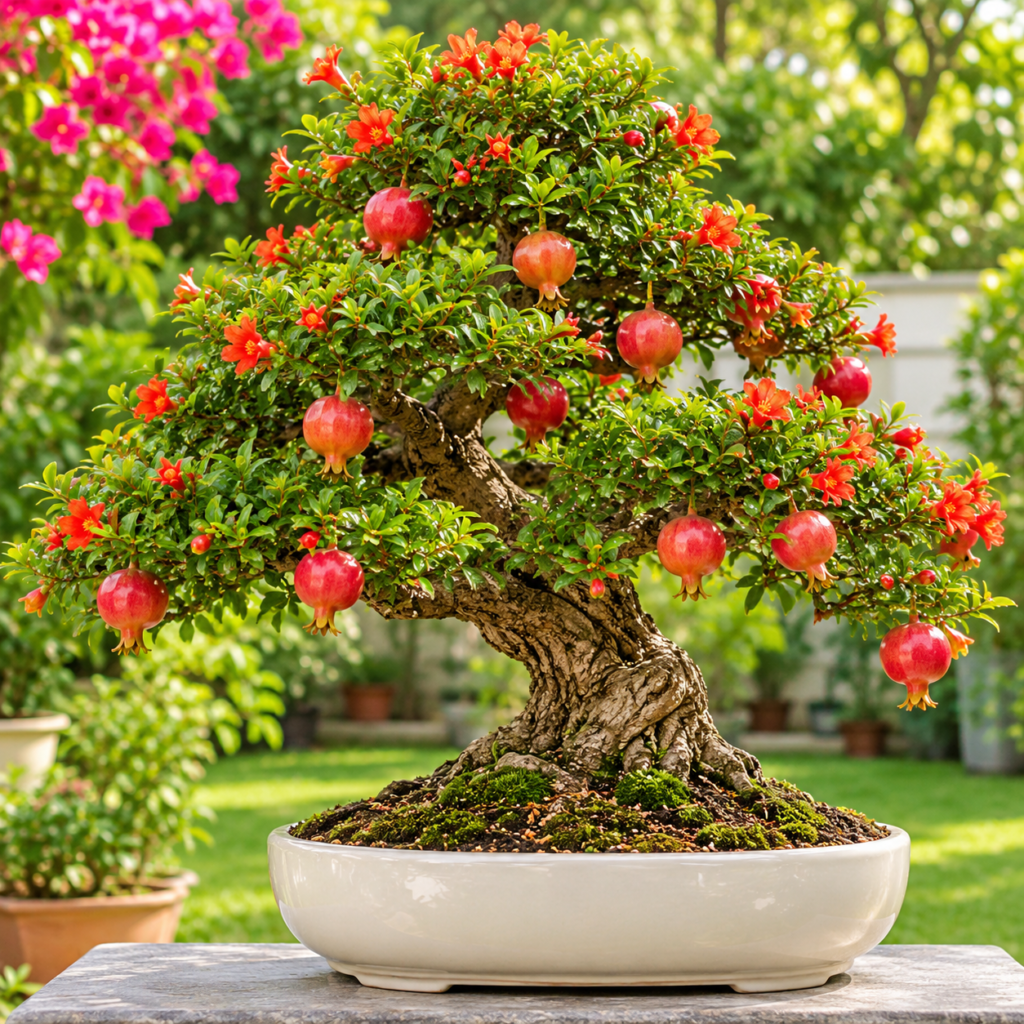
There is one catch. Most young pomegranates are thin and whippy, and a thin trunk never looks like a bonsai, no matter how well you prune. A tree that looks old, with a heavy trunk and a full, fine canopy, comes from doing two jobs in the right order: first thicken the trunk, then build the branches. The ten tips below follow exactly that order, so you can use them as a step-by-step plan for your own pomegranate bonsai.
Why Choose a Pomegranate Bonsai?
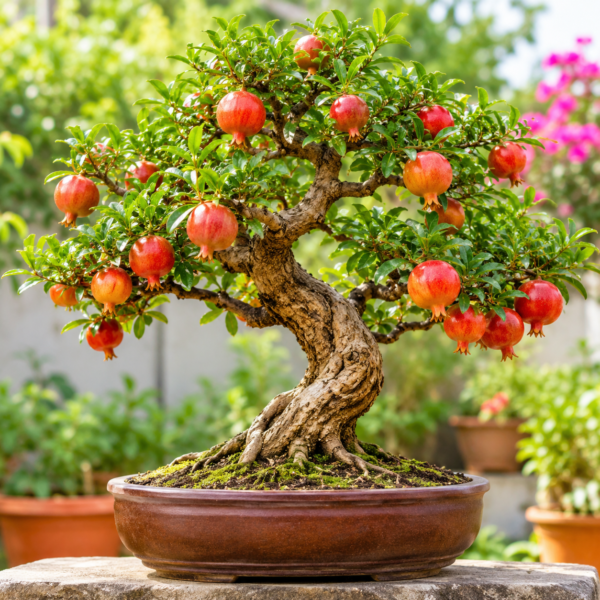
Pomegranate (Punica granatum) has several traits that suit bonsai well. Its leaves are naturally small and glossy, its bark peels and ripples with age, and it buds back readily from old wood, so you can correct mistakes and rebuild branches. It also flowers and fruits in a pot, which few other bonsai species do so reliably.
It is a sun-loving, heat-tolerant tree. In tropical and subtropical areas it can stay leafy for much of the year, while in cooler regions it drops its leaves in winter and rests. Either way, a healthy pomegranate bonsai responds quickly to good care, which means you see results in a season or two rather than in a decade.
Part 1: Building a Thick Trunk (Tips 1–5)
1. Start with the right material
The tree you begin with sets the ceiling for your pomegranate bonsai. A nursery plant or a cutting from a vigorous fruiting variety thickens much faster than a named dwarf. The dwarf pomegranate ‘Nana’ is excellent for finished, small-leaved bonsai, but it grows slowly, so many growers thicken a regular variety first and refine it later.
When you shop, look for a plant with a little taper (thicker at the base than the top) and a visible root flare where the trunk meets the soil. Avoid plants with a straight, pencil-like trunk of even thickness, because they rarely make interesting bonsai.
2. Grow it out in the ground or a big container
Roots drive trunk growth. A tree in a small pot has a small root system, and a small root system caps how thick the trunk can get. To thicken a pomegranate bonsai, plant it in open ground, or in a large pot or grow bag, and leave it there until the trunk is close to the size you want.
This “grow-out” stage can feel like you are not doing bonsai at all, but it is where the real work happens. Keep the soil loose and fast-draining, and resist the urge to move the tree into a bonsai pot too early.
3. Use a sacrifice branch
A sacrifice branch is a strong, low branch that you let grow long and unpruned while you shape the rest of the tree. Its extra leaf area collects more sunlight and sends more energy down into the trunk, which thickens it faster than pruning everything tight.
Once the trunk reaches the thickness you want, cut the sacrifice branch off flush with the trunk and seal the wound. Pomegranate heals well, but a clean, shallow cut now will leave a much smaller scar later. Place the sacrifice branch low on the trunk and on the side you will not use as the front.
4. Give it full sun
Pomegranate is a true sun lover. Aim for at least six hours of direct light every day. In shade, the tree stretches toward the light, producing long, weak shoots with big gaps between the leaves, and the trunk thickens slowly. In strong sun, growth is short, tough and compact, which is exactly what you want in bonsai.
If you live somewhere with very hot afternoons, a little light shade in the hottest hours can protect the leaves and the roots in a small container, but give it full sun the rest of the day.
5. Feed generously while it grows
A well-fed tree grows a thicker trunk. During the growing season, feed every two to three weeks with a balanced fertiliser, or use slow-release pellets or compost. Water deeply whenever the top of the soil starts to dry out, and let the excess drain freely so the roots never sit in water.
Once the trunk is thick and you move into refinement, ease off the feeding. Lighter feeding produces shorter internodes and smaller leaves, which gives your pomegranate bonsai a finer, more realistic look.
Part 2: Better Branching (Tips 6–10)
6. Hard-prune before new growth
The best time for structural pruning is late winter, just before the buds swell. At this point you can see the whole branch structure clearly and the tree has stored energy to push new growth. Decide on your trunk line and your first branches, then cut everything else back to shoots that fit your design.
Pomegranate buds readily on old wood, so a hard prune triggers new shoots close to the trunk. This is how you build a compact tree with branches that start low and stay in proportion.
7. Cut new shoots back to two leaf pairs
This is the most important habit for better branching. Let a new shoot grow out to four to six pairs of leaves, then cut it back to two pairs. Each cut makes the shoot split into two, then four, then eight, so the branches ramify and the canopy grows denser with finer twigs.
Repeat this through the growing season. Stop trimming early enough that the last shoots can harden before cold weather arrives, because soft late growth is easily damaged. Regular pinching is what turns a leggy pomegranate bonsai into a tight, well-ramified tree.
8. Remove suckers and thin crowded growth
Pomegranates send up suckers from the base and from the roots, and they often sprout shoots in tight clusters. Remove the suckers as soon as you see them, since they steal energy from the branches you actually want.
Also thin out shoots that cross, point straight up or straight down, or grow opposite each other at the same node. Open spacing lets light and air reach the inner branches. Without it, interior twigs weaken and die back, leaving you with leaves only at the tips.
9. Wire gently, or use clip-and-grow
Pomegranate branches are brittle and the bark marks easily, so wiring needs a light touch. Wire only young, flexible shoots, wrap the wire loosely at a shallow angle, and check it every couple of weeks. Pomegranate grows fast, and wire left on too long will bite into the bark and leave scars.
For thicker branches, avoid forcing a hard bend. Use guy wires to pull them slowly, or use the clip-and-grow method: prune to a bud that points in the direction you want and let the new shoot take over. Pruning gives you the direction without the risk of a snapped branch.
10. Repot and root-prune every 1–2 years
When the trunk is thick enough, move the tree from its grow-out container into a shallow bonsai pot. After that, repot every one to two years in late winter, and trim about a third of the roots each time. Use a fast-draining mix with plenty of grit, such as a blend of akadama, pumice and a little organic matter.
A compact, fibrous root system keeps the pomegranate bonsai small and healthy. It produces smaller leaves, shorter internodes and more flowers, and it gives the tree fresh room to grow every year.
Flowers and Fruit on a Pomegranate Bonsai
Part of the charm of this species is that it blooms in a pot. Flowers appear on new growth, so heavy pinching in early summer can reduce the number of blooms. A good compromise is to stop cutting back shoots once flower buds start to form, and to do your main shaping earlier in the season.
Fruit can be heavy for a small tree. If you want a good display, leave one to three fruits and remove the rest, so the branches are not strained and the tree does not exhaust itself. Water evenly while the fruit swells, because irregular watering is a common cause of cracked fruit.
Common Problems and Quick Fixes
Leaf drop. A pomegranate bonsai often sheds leaves in cold weather, which is normal. If it drops leaves in the growing season, check for overwatering, poor drainage or a sudden move from sun to shade.
Pests. Aphids and whiteflies cluster on soft new shoots. Wash them off with a strong stream of water, or use insecticidal soap, and check the undersides of leaves regularly.
No flowers. Too little sun, too much nitrogen or very heavy pruning are the usual causes. Increase light, ease off the feeding and prune earlier in the season.
Weak, leggy growth. This is nearly always low light. Move the tree to the sunniest spot you have.
For more everyday habits that keep any miniature tree healthy, read these 20 bonsai dos and don’ts.
A Simple Yearly Routine
| Season | What to do |
|---|---|
| Late winter, before buds swell | Structural pruning, repotting, root pruning |
| Spring | Feed regularly, pinch new shoots to two leaf pairs, remove suckers |
| Summer | Full sun, deep watering, keep trimming; wire young shoots only |
| Autumn | Stop heavy feeding, let shoots harden, remove dead twigs |
| Winter | Leaves may drop. Water lightly and keep the tree dry and out of hard frost |
Frequently Asked Questions
How long does it take to thicken a pomegranate bonsai trunk?
It depends on the variety, the climate and how well you feed and water, but expect several growing seasons in the ground or a large container. Fast growers in warm climates can gain noticeable thickness each year.
Can I keep a pomegranate bonsai indoors?
It does best outdoors in full sun. A very bright, sunny window can work for a short time, but the tree will weaken without strong light.
When should I repot a pomegranate bonsai?
Late winter, just before buds swell, is the best time. Repot young trees every year and older trees every two years.
What is the best soil for a pomegranate bonsai?
Use a fast-draining mix. A common blend is akadama, pumice and a little organic matter or fine bark. During the grow-out stage, a loose potting mix with added coarse sand or perlite works well. Avoid heavy garden soil that stays wet.
How often should I water it?
Water when the top layer of soil feels dry, not on a fixed schedule. In hot summer weather that may mean daily watering for a small pot. In winter, water much less, especially if the tree has dropped its leaves.
Can a pomegranate bonsai produce fruit?
Yes. With full sun and healthy roots, it will flower and set small fruit. Thin the crop to one to three fruits so the branches are not overloaded.
Should I grow it from a cutting or from seed?
Cuttings are usually the better choice. Hardwood cuttings root readily, grow true to the parent plant and thicken faster. Seedlings are slower and can vary a lot in leaf size, growth habit and fruit.
Why are the leaves turning yellow?
The usual causes are overwatering, poor drainage, low light, a nutrient shortage or cold weather. Check the soil moisture first, then the light, and adjust your feeding if the tree is growing slowly.
Final Thoughts
Growing a pomegranate bonsai rewards patience. A thick trunk takes several seasons, and no pruning trick can replace that time. But once the trunk is where you want it, the second half moves fast: prune hard in late winter, pinch new shoots often and keep the roots compact.
Follow these ten tips in order, thicken first and refine second, and your pomegranate bonsai will look like a small, old tree, with flowers and fruit as a bonus. Start with good material, give it sun and food, and let the tree do the rest.
Once you are comfortable with this species, you may want to try another one. Our azalea bonsai beginner’s guide and our steps for growing a maple tree bonsai are good next projects.