Feel free to share!
Sticky orchid leaves are a common but worrying problem for many plant lovers. When leaves feel shiny, tacky, or attract dust and ants, it usually signals an underlying issue that needs attention. Most often, the cause is sap-sucking pests feeding on your orchid’s juices. If ignored, sticky leaves can weaken the plant, slow growth, and even stop blooming altogether.
Table of Contents 👈 Tap Here
Orchid Leaves Are Sticky

Understanding Sticky Residue on Orchid Leaves
The sticky substance you feel on orchid leaves is usually called honeydew. It is a sugary liquid secreted by pests after they feed on plant sap. Unlike water or fertilizer residue, honeydew stays tacky and often spreads across leaf surfaces. Over time, this residue can encourage fungal growth and block light from reaching the leaves.
Is Sticky Sap Always a Pest Problem?
Not always. Some orchids naturally release small amounts of sap or nectar, especially near flower spikes or nodes. This natural secretion is usually clear, minimal, and limited to specific areas. However, when stickiness spreads across leaves or increases over time, pests are the most likely cause. Careful observation helps you tell the difference.
Common Signs That Pests Are Causing Sticky Leaves
When pests are involved, sticky leaves rarely appear alone. You may notice yellowing leaves, curled edges, stunted growth, or buds dropping early. Black sooty mold often grows on the sticky residue, turning leaves dark and dull. Ants crawling on the plant are another strong clue that honeydew-producing pests are present.
Aphids: A Major Cause of Sticky Orchid Leaves
Aphids are small, soft-bodied insects that cluster on new growth, buds, and flower spikes. They feed by sucking sap from tender tissues, producing large amounts of honeydew. Because aphids reproduce quickly, a small infestation can turn into a serious problem in a short time, leaving leaves sticky and growth distorted.
Scale Insects: Hard-to-Spot Sticky Pests
Scale insects look like small brown or tan bumps stuck to leaves and stems. They do not move much, which makes them easy to overlook. Despite their still appearance, they actively suck sap and release honeydew. Over time, scale infestations lead to sticky leaves, yellow patches, and overall plant decline.
Spider Mites and Sticky-Looking Damage
Spider mites do not produce honeydew like other pests, but their damage can sometimes appear sticky or dusty. They thrive in dry conditions and feed on leaf cells, causing speckled, pale leaves. Fine webbing on the underside of leaves is a key sign. While not sticky sap, their damage still requires quick action.
Whiteflies and Honeydew Problems
Whiteflies are tiny flying insects that gather on the undersides of leaves. When disturbed, they flutter up in small clouds. Like aphids, they feed on sap and produce honeydew, leading to sticky leaves and mold growth. Whiteflies spread fast, so early detection is critical to protect your orchid collection.
Ants: A Warning Sign You Shouldn’t Ignore
Ants are not the direct cause of sticky orchid leaves, but they are strong indicators of pest activity. Ants feed on honeydew and often protect aphids, mealybugs, and scale insects from predators. If you see ants regularly visiting your orchid, it almost always means sap-sucking pests are present.
13 Best Pest Solutions for Sticky Orchid Leaves
Isolate the Infected Orchid
The first and most important step is isolation. Moving the affected orchid away from healthy plants prevents pests from spreading. Many orchid pests crawl or fly short distances, so keeping infected plants separate helps protect your entire collection while you treat the problem effectively and safely.
Rinse Leaves With Lukewarm Water
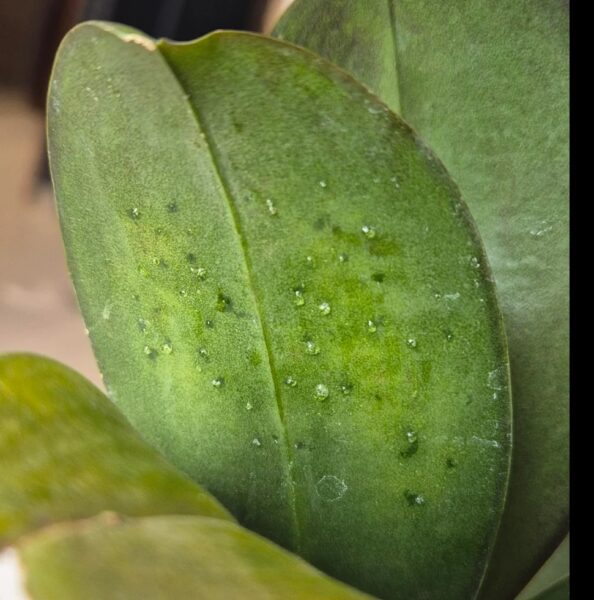
Gently rinsing orchid leaves with lukewarm water helps remove sticky residue and dislodge pests. This simple step reduces pest numbers immediately and makes further treatments more effective. Always support the leaves while rinsing and avoid soaking the crown to prevent rot or additional stress to the plant.
Manual Removal With Cotton Swabs
For visible pests like mealybugs and scale, manual removal works very well. Dip a cotton swab in rubbing alcohol and gently wipe insects off leaves and stems. This method kills pests on contact and allows you to target problem areas without exposing the entire plant to chemicals
Neem Oil Treatment
Neem oil is a popular natural solution for orchid pests. It disrupts insect feeding and reproduction while being relatively gentle on plants. Apply neem oil as a diluted spray, covering both sides of leaves. Repeat treatments weekly to break the pest life cycle and reduce future infestations.
Insecticidal Soap Spray
Insecticidal soap is effective against soft-bodied pests like aphids and whiteflies. It works by breaking down insect cell membranes, leading to dehydration. Spray thoroughly, ensuring good coverage of hidden areas. Always follow label instructions and test on a small area first to avoid leaf damage.
Homemade Mild Soap Solution
For light infestations, a mild homemade soap solution can help. Use a small amount of gentle liquid soap mixed with water. Spray lightly on affected areas and rinse after a few hours. This option is best for early-stage problems and should be used cautiously to prevent leaf burn.
Prune Severely Affected Leaves
If some leaves are heavily infested or damaged, pruning may be necessary. Removing these leaves reduces pest populations and helps the orchid focus energy on healthy growth. Use sterilized tools to prevent spreading pests or disease, and dispose of removed leaves away from your plants.
Improve Air Circulation
Good air circulation makes orchids less attractive to pests. Stagnant air creates warm, humid conditions where insects thrive. Using a fan or spacing plants properly helps leaves dry faster and discourages infestations. Improved airflow also supports overall orchid health and reduces disease risk.
Control Ant Activity
Since ants protect honeydew-producing pests, controlling ants is essential. Use barriers, sticky bands, or safe ant repellents around pots and growing areas. Once ants are gone, natural predators and treatments become more effective, making it easier to eliminate the pests causing sticky leaves.
Regular Leaf Inspection Routine
Inspect your orchids weekly, focusing on leaf undersides, joints, and new growth. Early detection makes pest control much easier and prevents sticky residue from spreading. A consistent inspection routine helps you catch small problems before they turn into serious infestations that harm plant health.
Avoid Over-Fertilizing
Excess fertilizer encourages soft, lush growth that pests love. Over-fertilized orchids are more likely to attract sap-sucking insects. Use a balanced feeding schedule and dilute fertilizers properly. Healthy, well-fed orchids are naturally more resistant to pests and recover faster from infestations.
Use Sticky Traps for Monitoring
Yellow sticky traps help monitor flying pests like whiteflies. While they won’t solve the problem alone, they provide early warning signs and reduce adult populations. Place traps near orchids and check them regularly to track pest activity and judge whether treatments are working.
Maintain Proper Orchid Hygiene
Clean pots, tools, and growing areas regularly to prevent pest buildup. Old leaves, debris, and dirty surfaces provide hiding places for insects. Good hygiene supports long-term pest prevention and keeps your orchid environment healthy, reducing the chances of sticky leaves returning in the future.
FAQS
1. Why are my orchid leaves sticky?
When Orchid Leaves Are Sticky, it is usually a sign of pest activity rather than a watering issue. Insects like aphids, mealybugs, scale, or whiteflies feed on plant sap and release a sugary substance called honeydew. This residue coats the leaves, making them feel tacky and attracting dust or mold if left untreated.
2. Are sticky orchid leaves a serious problem?
Yes, Orchid Leaves Are Sticky can indicate an underlying issue that may weaken your plant over time. While the stickiness itself is not immediately harmful, the pests causing it can reduce growth, damage leaves, and spread disease. Early detection and treatment help prevent long-term stress and leaf loss.
3. Which pests cause sticky leaves on orchids?
When Orchid Leaves Are Sticky, the most common culprits are aphids, scale insects, mealybugs, and whiteflies. These pests pierce plant tissue to suck sap and excrete honeydew. This sugary coating not only causes stickiness but can also encourage black sooty mold to grow on leaf surfaces.
4. Can honeydew alone make orchid leaves sticky?
Yes, Orchid Leaves Are Sticky primarily because of honeydew secreted by pests. Honeydew is a waste product produced when insects feed on sap. It spreads easily across leaf surfaces, flower spikes, and nearby furniture, making the problem noticeable even before pests are seen.
5. Does overwatering cause sticky orchid leaves?
Overwatering does not directly cause stickiness, but when Orchid Leaves Are Sticky, excess moisture can worsen the situation. Damp conditions encourage pests and fungal growth, which thrive in humid environments. Poor air circulation combined with wet leaves can make infestations harder to control.
6. Can sticky leaves harm orchid flowers?
Yes, when Orchid Leaves Are Sticky, flower buds and blooms may also be affected. Honeydew can coat buds, causing them to drop early or open poorly. In severe cases, pests may move from leaves to flower spikes, reducing bloom quality and overall plant appearance.
7. How do I clean sticky orchid leaves safely?
If Orchid Leaves Are Sticky, gently wipe them with a soft cloth dipped in lukewarm water. This removes surface residue and helps you inspect for pests. Avoid harsh chemicals or leaf-shine products, as orchids have sensitive tissues that can be damaged easily.
8. Is sooty mold related to sticky orchid leaves?
Yes, when Orchid Leaves Are Sticky, black sooty mold often follows. This fungus grows on honeydew deposits rather than attacking the plant directly. While mold itself doesn’t feed on orchids, it blocks light from leaves, reducing photosynthesis and slowing growth.
9. Can sticky leaves spread to nearby plants?
Absolutely. When Orchid Leaves Are Sticky, pests can crawl or fly to nearby houseplants. Honeydew may also drip onto surrounding surfaces, attracting ants that further spread insects. Isolating the affected orchid helps prevent infestations from spreading across your plant collection.
10. Are indoor orchids more prone to sticky leaves?
Yes, Orchid Leaves Are Sticky more often in indoor environments due to limited airflow and stable temperatures that favor pests. Indoor orchids lack natural predators, allowing insect populations to grow quickly. Regular inspection is essential to catch problems early.
11. Can sticky orchid leaves affect plant growth?
When Orchid Leaves Are Sticky, growth may slow because pests drain nutrients from the plant. Sap loss weakens leaves, roots, and flower spikes over time. Combined with reduced photosynthesis from mold or residue, the orchid may struggle to produce new leaves or blooms.
12. Should I remove affected orchid leaves?
If Orchid Leaves Are Sticky, removing severely damaged leaves can help reduce pest populations. However, do not remove healthy leaves unnecessarily, as orchids rely on their foliage for energy. Always sterilize cutting tools to prevent spreading disease.
13. How long does it take to fix sticky orchid leaves?
Once Orchid Leaves Are Sticky, improvement depends on pest severity and treatment consistency. Mild cases may clear in one to two weeks, while heavy infestations can take longer. Regular cleaning, monitoring, and proper care speed up recovery and prevent recurrence.
14. Can sticky leaves come back after treatment?
Yes, even after treatment, Orchid Leaves Are Sticky can return if pests are not fully eliminated. Eggs may hatch later, restarting the cycle. Continued observation and preventive care, such as good airflow and plant hygiene, are key to long-term control.
15. How can I prevent sticky leaves in the future?
To avoid Orchid Leaves Are Sticky, inspect plants weekly, maintain good airflow, and avoid overcrowding. Quarantine new plants before placing them near others. Healthy orchids are more resistant to pests, so proper light, watering, and nutrition play a major preventive role.
16. Do ants indicate a sticky leaf problem?
Yes, ants often appear when honeydew is present on plants. They are attracted to sugary residues and may signal an unseen pest problem. Ants can also protect pests from predators, making infestations harder to control if ignored.
17. Can sticky leaves appear without visible insects?
Sometimes insects hide under leaves, in leaf joints, or near roots. Sticky residue may be noticed first, even before pests are visible. Using a flashlight or magnifying glass helps reveal hidden insects early.
18. Is stickiness normal during orchid blooming?
Sticky leaves are not a normal part of blooming. While some orchids produce nectar on flower spikes, leaf stickiness usually points to pests. Always inspect carefully to rule out infestations.
19. Should I isolate a sticky orchid?
Yes, isolating the plant prevents pests from spreading. Keep it separate until the issue is resolved and no new residue appears. Isolation is one of the most effective preventive steps.
20. Can sticky residue damage surfaces around orchids?
Yes, honeydew can drip onto windowsills, floors, or furniture, leaving stains and attracting ants or mold. Cleaning surrounding areas helps eliminate secondary problems and keeps your growing space hygienic.