Easy Bonsai Trees for Indoors: 20 Best Varieties, Common Problems and Solutions

Table of Contents
What Is a Bonsai Tree?
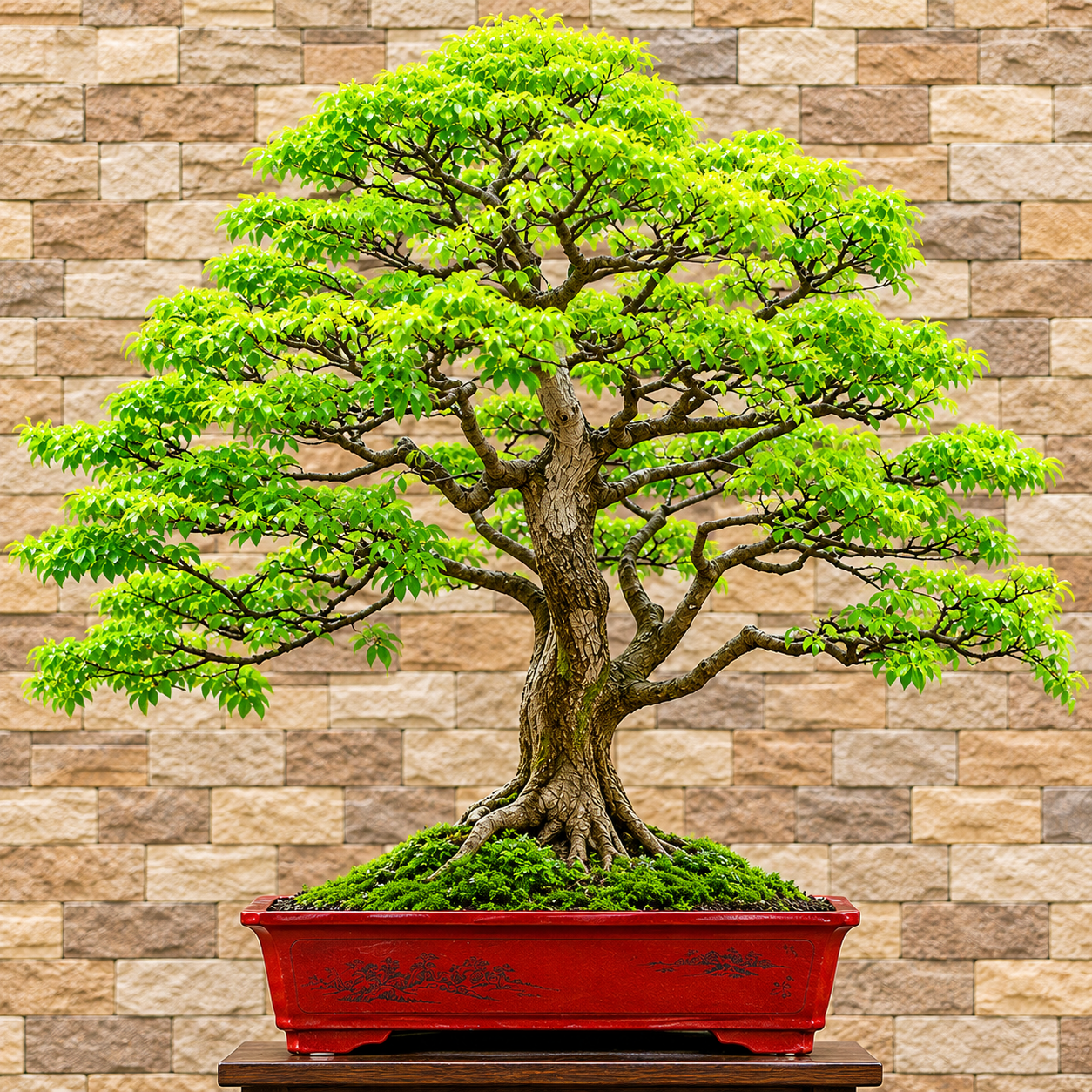
“Bonsai” is a Japanese word meaning “tree in a tray.” It is not a special type of plant but an art form in which an ordinary tree species is kept small through pruning, wiring, root trimming and regular repotting. A bonsai is a real tree, only shaped and restrained.
Indoor bonsai are almost always tropical or subtropical species, because they have no strict winter rest and tolerate steady room temperatures. Hardy trees such as junipers, pines, maples and boxwoods need a cold winter outdoors and usually fail when kept in a warm room all year. Light is the biggest limit indoors. Even the best species grow poorly in a dim corner, so a bright window or a grow light matters more than any other choice you make.
Every bonsai depends on four basics: strong light, correct watering, well-draining soil and regular light pruning. Because the pot is small, the soil dries faster than a normal houseplant, so check it every day or two. Get these four right and easy bonsai trees will thrive for years. Container choice matters too, so read our complete guide to bonsai pots before you buy one.
What makes easy bonsai trees easy? They tolerate average indoor humidity, forgive an occasional missed watering and recover quickly from pruning. Ficus, jade and money tree fit that description, while fussier species need steady light, humidity and temperature.
20 Best Easy Bonsai Trees for Indoors
Quick Buying Guide
Choosing between easy bonsai trees and their more demanding cousins? Use this guide to match a tree to your room, your light and your experience.
Easiest to keep: Ficus, Jade, Dwarf Jade, Schefflera and Money Tree are the most forgiving, and the best easy bonsai trees for a first purchase.
Need more attention (Moderate): Podocarpus, Willow-Leaf Fig, Weeping Fig, Ming Aralia, Barbados Cherry, Brazilian Rain Tree, Sweet Plum, Tamarind, Fukien Tea, Natal Plum, Brush Cherry and Desert Rose reward steady care and good light, and they suit owners who have already kept easy bonsai trees alive.
Challenging: Jaboticaba, Serissa and Premna are best for owners who already have a bright, stable spot or a grow light. They are not easy bonsai trees, so wait until you have some experience.
Good for warm rooms: Ficus, Money Tree, Willow-Leaf Fig, Ming Aralia, Brazilian Rain Tree, Fukien Tea, Premna and Desert Rose. Podocarpus and Brush Cherry, by contrast, prefer a bright, cool room in winter. The Easy group generally copes with ordinary household warmth, so those are the safest easy bonsai trees for a heated home.
Likely to need a grow light in an average home: Jade, Dwarf Jade, Tamarind, Natal Plum, Barbados Cherry, Brazilian Rain Tree, Desert Rose, Jaboticaba and Premna. Even easy bonsai trees like jade need strong light, so a grow light is cheap insurance.
Start here if you want easy bonsai trees: the first five tolerate average homes and the occasional mistake.
1. Ficus (Ficus microcarpa)
Ficus (Ficus microcarpa): Often sold as Ficus retusa or “ginseng ficus.” Its thick trunk, glossy leaves and aerial roots give a mature look quickly, and it bounces back from pruning, which is why it tops most lists of easy bonsai trees.
Light: Bright light near a sunny window.
Water: When the top layer of soil feels dry.
Difficulty: Easy
Problems: Leaves drop after a move, a draft or a sudden change in light. Leaves turn yellow when the soil stays wet.
Solutions: Choose a bright, stable spot and leave the tree there. Water only when the surface dries and empty the drip tray afterward.
2. Jade (Crassula ovata)
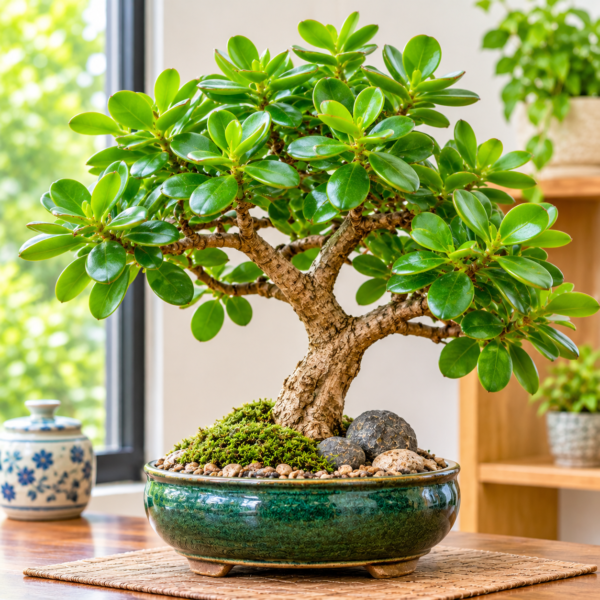
Jade (Crassula ovata): A succulent with a thick, woody trunk and fleshy leaves. It stores water, so it copes with dry indoor air and the occasional missed watering, which makes it one of the most forgiving easy bonsai trees.
Light: Several hours of bright light, ideally a south or west window.
Water: Soak thoroughly, then let the soil dry almost completely.
Difficulty: Easy
Problems: Soft, rotting stems from overwatering. Stretched, leggy growth with wide gaps between leaves in low light.
Solutions: Use gritty, fast-draining soil and wait for it to dry between waterings. Move the tree to your brightest window, or add a grow light, and pinch back long shoots.
3. Dwarf Jade (Portulacaria afra)
Dwarf Jade (Portulacaria afra): Also called elephant bush. It has smaller leaves than jade, reddish stems and a naturally tree-like shape, so it is one of the easy bonsai trees that is also quick to style.
Light: Bright light with several hours of sun.
Water: Deeply but infrequently, letting the soil dry between waterings.
Difficulty: Easy
Problems: Leaves shrivel or drop when the soil is too dry and also when it is too wet, so the symptom alone does not tell you the cause. Growth turns thin and weak in dim rooms.
Solutions: Feel the soil first: if it is dry, water deeply, and if it is damp, wait. Place the tree beside a sunny window.
4. Schefflera (Schefflera arboricola)
Schefflera (Schefflera arboricola): Also known as the dwarf umbrella tree or Hawaiian umbrella tree. It has glossy leaflets, develops a thick trunk with age and recovers well from hard pruning, which makes it one of the easy bonsai trees for busy owners.
Light: Bright indirect light. It tolerates medium light, but growth becomes slow and leggy.
Water: When the top of the soil has dried out.
Difficulty: Easy
Note: Toxic to cats and dogs.
Problems: Leggy growth with oversized leaves in low light. Yellowing and leaf drop from overwatering or from temperatures below about 13°C (55°F).
Solutions: Move it closer to a window or under a grow light, then prune back to keep it compact. Check the soil before watering and keep the tree away from cold glass.
5. Money Tree (Pachira aquatica)
Money Tree (Pachira aquatica): Known for its braided trunk, which is a styling technique rather than a separate species, and for its palm-like leaves. It is tolerant, which earns it a place among easy bonsai trees.
Light: Bright indirect light. It tolerates lower light, but growth slows.
Water:when the topmost layer of soil is dry. Never leave it standing in water.
Difficulty: Easy
Problems: Yellow leaves, leaf drop and a soft trunk from too much water. Brown leaf edges in dry air or near heaters.
Solutions: Water only after the soil dries and tip out excess from the saucer. Keep it away from vents and use a pebble tray for humidity.
The next twelve trees are rewarding but need more attention than the easy bonsai trees above, usually because of light, temperature or humidity.
6. Podocarpus (Podocarpus macrophyllus)
Podocarpus (Podocarpus macrophyllus): Also called Buddhist pine or Chinese yew. This evergreen conifer has dense, needle-like foliage and is one of the few conifers that can live indoors all year, but only in a bright, cool room. It is a poor match for a warm, heated living room.
Light: A bright to sunny window all year.
Water: Keep moderately moist, never bone dry or soggy. In winter it prefers a cool room of roughly 10 to 15°C (50 to 59°F).
Difficulty: Moderate
Problems: Needles yellow and drop in low light or in a warm, dim winter room. Yellowing also follows soggy soil.
Solutions: Give it your brightest window and a cooler spot in winter, such as an unheated bright room. Water by feel and pinch the growing tips regularly to keep the shape compact.
7. Willow-Leaf Fig (Ficus neriifolia)
Willow-Leaf Fig (Ficus neriifolia): Narrow, willow-like leaves, grey bark and aerial roots. It buds back readily after pruning. It is also sold as Ficus salicifolia or Ficus salicaria, and botanists still disagree on the correct name, so check the common name when you buy.
Light: Bright light, with a few hours of direct sun if possible.
Water: When the top layer begins to dry.
Difficulty: Moderate. It is not frost-hardy and needs a warm room in winter.
Problems: Leaf drop after drafts, moves or low light. Thrips and scale insects on leaves and stems.
Solutions: Keep it in a warm, bright, draft-free spot. Inspect leaves regularly, rinse them and treat pests with insecticidal soap.
8. Weeping Fig (Ficus benjamina)
Weeping Fig (Ficus benjamina): Fine, arching branches and glossy leaves. It is widely sold as an indoor tree and trains well into bonsai shapes. It is more sensitive to change than Ficus microcarpa, which is why it is rated Moderate rather than one of the easy bonsai trees.
Light: Bright light, with some direct sun.
Water:When the soil’s uppermost layer is dry
Difficulty: Moderate
Problems: Heavy leaf drop when moved or when conditions change. Scale insects and mealybugs.
Solutions: Settle it in one spot and avoid moving it, as new leaves usually regrow. Wipe pests off with alcohol on a cotton swab and follow up with insecticidal soap.
9. Ming Aralia (Polyscias fruticosa)
Ming Aralia (Polyscias fruticosa): Lacy, feathery foliage and a twisting trunk with pale bark. It has long been used as an indoor bonsai subject and enjoys warmth and humidity.
Light: Bright light without harsh direct sun.
Water: Keep evenly moist. It drops leaves if the soil dries out, but it dislikes soggy roots too.
Difficulty: Moderate. Night temperatures should stay above roughly 16 to 18°C (62 to 65°F).
Problems: Leaf drop in cold drafts, dry air or drying soil. Aphids, mealybugs and root rot after overwatering.
Solutions: Keep it warm and steady, away from heaters and cold windows, and use a humidity tray. Check the soil before watering and wipe off pests with soapy water.
10. Barbados Cherry (Malpighia emarginata)
Barbados Cherry (Malpighia emarginata): Often sold as Malpighia glabra. It has small glossy leaves, weeping branches, pink flowers and edible red fruit, and sellers describe it as forgiving, so it is a sensible step up from easy bonsai trees.
Light: Very bright. Plan on at least five hours of natural light even in winter.
Water: Keep the soil evenly moist and feed regularly in the growing season.
Difficulty: Moderate
Problems: Yellow leaves from overwatering, underwatering or lack of nutrients. Sparse growth and few flowers in a dim spot.
Solutions: Water by feel and feed through spring and summer. Move it to your brightest window or add a grow light.
11. Brazilian Rain Tree (Pithecellobium tortum)
Brazilian Rain Tree (Pithecellobium tortum): Now classified as Chloroleucon tortum, though bonsai growers still use the older name. It has delicate compound leaves that fold at night, fragrant puffball flowers and spiny wood. Sellers call it easy to moderate, but bonsai specialists warn it needs high light and humidity indoors.
Light: High light, from a sunny window or a grow light.
Water: When the top layer dries, with a humidity tray nearby. Keep it above 10°C (50°F).
Difficulty: Moderate
Problems: Spider mites, aphids and whitefly indoors. Weak growth and leaf drop in low light or dry air.
Solutions: Rinse the foliage regularly and treat pests with insecticidal soap. Provide strong light and a humidity tray, and wear gloves when pruning because the branches are very spiny.
12. Sweet Plum (Sageretia theezans)
Sweet Plum (Sageretia theezans): New leaves are tinged red and mature into glossy green, with flaky bark and small purple fruit. It responds well to pruning and does best in warm, bright rooms. It makes a good second tree after one of the easy bonsai trees.
Light: A bright position with good daylight, shaded from the hottest midsummer sun.
Water: Keep evenly moist and do not let it dry out. Keep it above about 10°C (50°F) at night.
Difficulty: Moderate
Problems: Leaf drop after a sudden change in light, temperature or location. Brown, curling leaf tips when the soil or air gets too dry.
Solutions: Choose a steady spot away from cold windows. Water by feel and use a humidity tray.
13. Tamarind (Tamarindus indica)
Tamarind (Tamarindus indica): Feathery leaflets and a thick, rugged trunk as it ages. It has become popular in bonsai culture, especially in Southeast Asia, and is tough once established.
Light: Bright, with a few hours of sun from a south-facing window, or a grow light.
Water: Thoroughly, when the top inch of soil is dry, in fast-draining soil.
Difficulty: Moderate
Problems: Leggy growth and leaf loss in dim light. Root rot from soggy soil.
Solutions: Place it in your brightest window or add a grow light, and prune to keep it compact. Make sure the pot drains freely and never leave water in the saucer.
14. Fukien Tea (Ehretia microphylla)
Fukien Tea (Ehretia microphylla): Still widely sold as Carmona microphylla. It has tiny glossy leaves, small white flowers through much of the year and gnarled bark that looks old even on young trees.
Light: Bright, steady light.
Water: Evenly moist. It dislikes both drought and soggy soil, so use a humidity tray.
Difficulty: Moderate. It is often marketed as one of the easy bonsai trees, but some beginners find it fussy.
Problems: Leaf drop when the soil dries out, the tree is moved or cold drafts hit it. Root damage from rough repotting.
Solutions: Check the soil daily and keep it in a warm, draft-free spot. Repot every two years in spring and trim the roots gently, because the root system is sensitive.
15. Natal Plum (Carissa macrocarpa)
Natal Plum (Carissa macrocarpa): Formerly called Carissa grandiflora. It has glossy leaves, fragrant star-shaped white flowers and red edible fruit. The stems are thorny, so handle it with care.
Light: At least four to six hours of strong light, from a south window or a grow light.
Water: Check the soil first and avoid keeping it wet. Bring it inside before temperatures fall below about 10°C (50°F).
Difficulty: Moderate
Problems: Root rot when the soil stays wet. Few flowers in low light.
Solutions: Use a gritty, fast-draining mix and water only when the surface dries. Give it the sunniest spot you have, wear gloves and prune after flowering.
16. Brush Cherry (Syzygium paniculatum)
Brush Cherry (Syzygium paniculatum): Glossy leaves with bronze-red new growth, fluffy white flowers and edible fruit. It is vigorous, but it wants a very bright, cool winter rather than a hot, dim one.
Light: Very bright, directly at a window, especially in winter.
Water: Do not let it dry out in strong sun. A winter room around 15 to 18°C (59 to 64°F) suits it.
Difficulty: Moderate
Problems: Aphids, spider mites and scale insects. Leaf loss when the winter room is too warm, dim or damp.
Solutions: Inspect leaves weekly, rinse them and use insecticidal soap at the first sign of pests. Keep it very bright and cool in winter, and bend wired branches carefully because they are brittle.
17. Desert Rose (Adenium obesum)
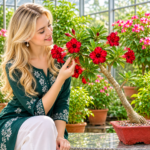
Desert Rose (Adenium obesum): A succulent with a swollen trunk, called a caudex, and bright pink flowers. In most climates it can only be grown as an indoor bonsai, and it makes a striking one.
Light: At least six hours of direct sun, from your sunniest window.
Water: Let the soil nearly dry out between waterings, and cut back in winter.
Difficulty: Moderate
Note: Keep away from pets and children, as it is toxic if eaten.
Problems: Trunk and root rot from overwatering. Winter leaf drop, which is normal dormancy, and weak, thin growth when the light is poor.
Solutions: Use very gritty soil and water sparingly, especially in winter. Give it the strongest light you can, and do not panic when it loses its leaves in the cold months.
The last three are challenging. They suit owners who have outgrown easy bonsai trees and want a project.
18. Jaboticaba (Plinia cauliflora)
Jaboticaba (Plinia cauliflora): Formerly Myrciaria cauliflora. Flowers and fruit grow straight from the trunk, which makes it one of the most unusual indoor bonsai. It is slow-growing and demanding, so it sits well outside the easy bonsai trees.
Light: Full sun, ideally six or more hours, or a strong grow light.
Water: Keep consistently moist and never let it dry out. Keep it above about 10°C (50°F).
Difficulty: Challenging
Problems: Very slow growth and no flowering without strong light. Leaf scorch and drop when the soil dries out.
Solutions: Give it your brightest spot or a grow light. Water as soon as the surface dries and fertilize every few weeks in spring and summer.
19. Serissa (Serissa japonica)
Serissa (Serissa japonica): Also sold as Serissa foetida and called snow rose or tree of a thousand stars. It has tiny white flowers and gnarled bark, and it is a genuine indoor bonsai, but it is famously fussy and far from the easy bonsai trees at the top of this list. Choose it only if you are ready for a challenge.
Light: Very bright all year. The warmer the room, the brighter the light it needs.
Water: Evenly moist. It drops leaves if the soil gets too dry or too wet.
Difficulty: Challenging
Problems: Leaf drop after a move, a repotting or any shift in light, temperature or watering. Yellowing and drop in the low humidity of heated rooms.
Solutions: Decide on its permanent spot before you buy and keep conditions steady. Use a humidity tray. Yellow leaves most often mean too little light, so brighten the spot first.
20. Premna (Premna microphylla)
Premna (Premna microphylla): Sometimes called musk maple. It has tiny leaves with a distinctive smell, rugged bark and vigorous branching. It buds back well after pruning but asks for plenty of light, warmth and humidity in return, so it is not one of the easy bonsai trees indoors.
Light: High light, ideally six hours of sun or a grow light.
Water: When the top layer dries, with warmth and a humidity tray. Keep it above 10°C (50°F).
Difficulty: Challenging
Problems: Yellow leaves from low light, overwatering or underwatering. Scale, spider mites, aphids and powdery mildew in stale, humid air.
Solutions: Place it in a bright window or under a grow light, away from heating vents. Keep air moving around the tree and treat pests at the first sign.
Bonsai Trees to Avoid Buying as Year-Round Indoor Plants
Garden centers and supermarkets often label outdoor trees as “indoor bonsai” because they look neat and green on the shelf. Junipers, pines, maples and boxwoods are hardy outdoor species that need a cold winter rest. Kept in a warm room all year, they typically weaken and die within a season or two. Buy them only if you can give them a sheltered spot outdoors. They are not easy bonsai trees for indoors, however good they look in the shop.
Chinese elm sits in the middle. It can be grown indoors if it sits in a very bright window, and an indoor tree stays evergreen. But it does best outdoors, so treat it as a seasonal indoor tree rather than a true year-round choice, which is why it is not on the main list.
If you would like to grow a hardy tree outdoors, start with our guide to maple tree bonsai in 10 easy steps. For a flowering option with its own care rules, see our complete beginner’s guide to azalea bonsai.
Frequently Asked Questions
1. Which simple bonsai trees are ideal for novices?
Ficus, jade, dwarf jade, schefflera and money tree are the most forgiving of all easy bonsai trees. All five cope with average homes if they get bright light and careful watering.
2. How often should I water easy bonsai trees indoors?
It depends on the species, pot size and room. Skip fixed schedules and check the soil daily. Most trees want water when the top layer is just dry, while succulents like jade and desert rose need longer dry spells.
3. Do simple bonsai trees require a grow light or direct sunlight?
Even easy bonsai trees need strong light for several hours a day, so a south, east or west window is ideal. If your room is dim, a full-spectrum LED grow light for 10 to 12 hours a day can fill the gap. Without enough light, even hardy species grow weak and stop recovering from pruning.
4. Can I keep a juniper or maple bonsai indoors?
Not year-round. These are outdoor trees that need a cold winter rest, and they usually decline in a warm room. Keep them outdoors in a sheltered spot.
5. Can a Chinese elm live indoors all year?
It can if you give it a very bright window, but it prefers being outdoors. That is why this list focuses on tropical and subtropical species that are more reliable indoors.
6. Why are my bonsai’s leaves turning yellow?
Overwatering is the most common cause, followed by poor drainage and low light. Check the soil moisture and the brightness of the spot before changing anything else.
7. How long do bonsai trees live?
With good care, they can live for decades. Many indoor species last 20 years or more when their light and watering needs are met.
8. How often should I repot my bonsai?
Every two to three years for most trees, and more often for fast growers. Repot in spring or early summer, when the tree is actively growing.
9. What soil is best for bonsai?
A fast-draining bonsai mix, often with akadama, pumice and lava rock. Succulents like jade and desert rose need an even grittier mix. Regular potting soil holds too much water.
10. Do I need special tools?
Sharp pruning shears and small scissors are enough to begin. Wire and concave cutters can come later.
11. Should I put my indoor bonsai outside in summer?
Many trees benefit from a summer outdoors with morning sun and afternoon shade. Bring tropical species back inside before nights drop below about 10 to 13°C (50 to 55°F), and never let them freeze.
12. Should I fertilize my bonsai?
Yes. Small pots hold few nutrients, so regular feeding during the growing season keeps trees strong. Feed less in winter when growth slows.
13. Are any of these trees toxic to pets?
Yes. Schefflera is toxic to cats and dogs, and desert rose is toxic if eaten. Keep both out of reach of pets and children.
14. Are easy bonsai trees maintenance-free?
No. Easy bonsai trees still need bright light, regular watering checks, feeding in the growing season and light pruning. They simply forgive mistakes better than demanding species such as Serissa or Premna.
Final Thoughts
Easy bonsai trees prove that this art form is more approachable than it looks, as long as you pick a species that truly belongs indoors. Start with one of the five easy bonsai trees, give it the brightest spot in your home, water by feel and prune with patience. Once you have learned its habits, you can move on to the Moderate and Challenging varieties on this list and enjoy a living piece of art that grows more beautiful each year. For more habits worth following, read these 20 bonsai tree dos and don’ts, and browse the species care sheets at Bonsai Empire as you learn.