Feel free to share!
A bad smell coming from your orchid potting medium is never a good sign and should not be ignored. In most cases, it indicates root damage, excess moisture, or decomposing materials inside the pot. As a long-time orchid grower and plant care researcher, I’ve seen that early action can save an orchid from permanent decline. Understanding the cause and repotting correctly restores root health and long-term plant vitality.
Table of Contents 👈 Tap Here
Orchid Potting Medium Smells Bad
1. What a Healthy Orchid Potting Medium Should Smell Like
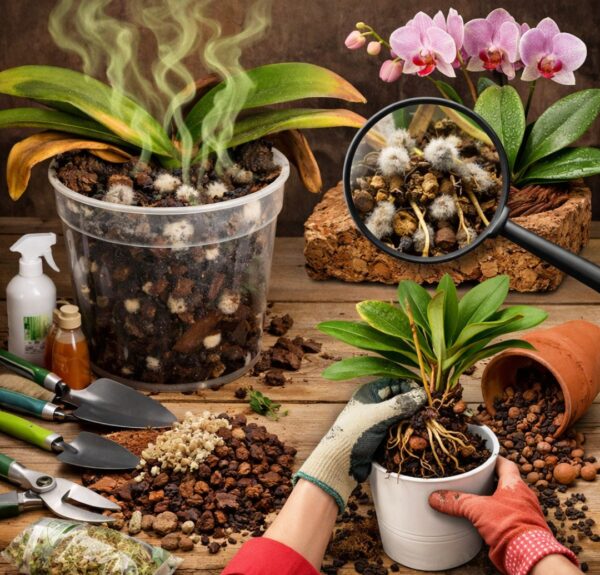
A healthy orchid potting medium has a mild, clean, earthy scent. It should never smell sour, rotten, or swampy. Fresh bark, charcoal, or quality sphagnum moss allows air to circulate freely around the roots. When airflow and drainage are balanced, harmful bacteria cannot thrive, keeping both the roots and the medium stable, dry, and odor-free for extended periods.
2. Common Smells and What They Mean
Different odors indicate different problems inside the pot. A musty smell often signals trapped moisture, while a sour odor suggests bacterial activity. Rotten-egg smells usually indicate severe root rot. These smells are early warning signs that conditions inside the pot are no longer suitable for orchid roots and immediate inspection is necessary to prevent further damage.
3. Root Rot: The Most Common Cause of Bad Odors
Root rot is the leading cause of foul-smelling orchid media. When roots sit in constant moisture, they lose oxygen and begin to decay. As the roots break down, they release unpleasant odors that spread through the potting mix. If untreated, root rot can move quickly, destroying healthy tissue and eventually killing the orchid entirely.
4. Overwatering and Poor Drainage Problems
Overwatering is often unintentional but highly damaging. Orchids need wet-dry cycles, not constant moisture. Poor drainage pots or compacted media trap water at the root level. This creates an anaerobic environment where bacteria flourish. The resulting smell is a clear indicator that watering habits or pot design need immediate correction.
5. Old or Decomposed Potting Medium
Orchid potting media breaks down over time, especially bark-based mixes. As bark decomposes, it becomes compacted and holds too much moisture. This decomposition process releases organic gases that cause unpleasant smells. Most orchids require repotting every one to two years to maintain proper airflow and prevent the medium from turning sour.
6. Fungal and Bacterial Growth in the Medium
Warm, wet conditions encourage fungal and bacterial colonies to develop inside the pot. These microorganisms feed on decaying roots and organic matter, producing strong odors. While some microbes are naturally present, excessive growth signals poor conditions. Addressing the smell early helps stop infections before they spread to the crown or leaves.
7. Using the Wrong Potting Mix for Orchids
Regular garden soil or low-quality mixes are unsuitable for orchids. These materials retain too much water and restrict airflow. Orchids are epiphytes by nature and require loose, breathable media. Using the wrong mix almost guarantees root suffocation, microbial growth, and persistent bad smells over time.
8. When You Should Repot an Orchid Immediately
Immediate repotting is necessary when the smell is strong, roots appear mushy, or the plant shows stress symptoms like yellowing leaves. A foul odor means damage is already occurring below the surface. Waiting too long increases the risk of losing the entire root system, making recovery more difficult and less predictable.
9. Best Time of Year to Repot Orchids
The best time to repot most orchids is during active growth, usually in spring or early summer. Repotting at this stage allows new roots to adapt quickly to fresh media. However, if a strong smell is present, repotting should be done immediately regardless of season to prevent further root decay.
10. How to Remove the Orchid Safely From the Pot
Removing an orchid requires patience and care. Gently squeeze the pot to loosen the roots and slide the plant out slowly. Avoid pulling forcefully, as healthy roots are easily damaged. If roots are stuck, soaking the pot briefly can soften the medium and reduce stress during removal.
11. How to Clean and Trim Orchid Roots Properly
After removal, rinse the roots under lukewarm water to expose their condition. Healthy roots are firm and green or silvery, while dead roots are brown and mushy. Use sterilized scissors to trim damaged roots carefully. Proper sanitation reduces infection risk and supports successful regrowth after repotting.
12. Choosing the Best Potting Medium for Orchids
For long-term success, choosing the proper potting medium is essential. Sphagnum moss, blended orchid mixtures, or high-quality orchid bark offer adequate airflow and drainage. The decision is based on your watering habits and climate. Reputable horticultural providers provide tested blends that promote healthy root systems and lessen odour issues.
13. Repotting Step-by-Step for Long-Term Health
Place the orchid in a clean pot with drainage holes, positioning the roots naturally. Add fresh medium gradually, tapping the pot to settle it without compacting. The goal is stability with airflow. Proper repotting reduces stress, eliminates odor-causing conditions, and creates an environment where roots can thrive safely.
14. How to Prevent Orchid Medium From Smelling Bad Again
Preventing future odors requires consistent care. Water only when the medium is nearly dry, ensure good airflow, and use breathable pots. Regular inspections help catch early signs of decay. With proper maintenance and timely repotting, orchid potting medium stays fresh, clean, and supportive of long-term plant health.
Conclusion
A bad-smelling orchid potting medium is a clear signal that something is wrong below the surface. By understanding the causes and following proven repotting practices, you can protect your orchid’s roots and overall health. Consistent care, quality materials, and early intervention ensure your orchid remains strong, odor-free, and capable of producing beautiful blooms year after year.
FAQS
1. Why does my orchid potting medium smells bad even though I water carefully?
Even careful watering can lead to problems if the potting medium does not dry properly. Poor airflow, compacted media, or an unsuitable pot can trap moisture around the roots. Over time, this creates conditions where bacteria grow, causing unpleasant odors that signal declining root health.
2. Is it normal when orchid potting medium smells bad after a few months?
No, a healthy orchid mix should not develop a strong odor within a few months. If orchid potting medium smells bad early, it usually means the mix is breaking down too fast or staying wet for too long. This indicates a need to reassess watering habits or media quality.
3. Can root rot occur when orchid potting medium smells bad?
Yes, root rot is one of the most common reasons orchid potting medium smells bad. Rotting roots release organic compounds that create foul odors. If left untreated, the rot can spread quickly and destroy healthy roots, making repotting and trimming essential for recovery.
4. Does poor drainage cause orchid potting medium smells bad?
Poor drainage is a major factor when orchid potting medium smells bad. Without proper drainage holes, excess water stays trapped in the pot. This lack of oxygen encourages bacterial growth, leading to sour or rotten smells that indicate unhealthy root conditions.
5. Should I change pots if orchid potting medium smells bad?
Yes, changing pots is often helpful when orchid potting medium smells bad. Old or non-breathable pots restrict airflow and hold moisture. Switching to a clean pot with good drainage improves air circulation and reduces the chance of future odor problems.
6. Can old bark mix be the reason orchid potting medium smells bad?
Old bark decomposes over time, becoming compact and water-retentive. When orchid potting medium smells bad, decomposed bark is often the cause. Repotting with fresh, high-quality bark restores airflow and prevents moisture buildup that leads to odor.
7. Is fungus responsible when orchid potting medium smells bad?
Fungal growth can definitely be responsible when orchid potting medium smells bad. Fungi thrive in warm, damp environments and feed on decaying organic matter. The smell is often an early warning sign before visible mold or plant decline appears.
8. Can using regular soil make orchid potting medium smells bad?
Yes, regular garden soil is unsuitable for orchids and commonly causes orchid potting medium smells bad. Soil holds too much water and blocks airflow to the roots. Orchids require loose, airy media to stay healthy and odor-free.
9. How fast should I act when orchid potting medium smells bad?
Action should be taken as soon as possible when orchid potting medium smells bad. Delaying inspection allows root damage to worsen. Early repotting and trimming can save healthy roots and significantly improve the plant’s chance of recovery.
10. Does warm weather make orchid potting medium smells bad faster?
Warm temperatures accelerate decomposition and microbial growth. When orchid potting medium smells bad during warm weather, it is often due to faster breakdown of organic materials combined with excess moisture, making regular monitoring especially important.
11. Can poor air circulation cause orchid potting medium smells bad?
Yes, poor air circulation around the pot can contribute when orchid potting medium smells bad. Stagnant air prevents evaporation and keeps the medium wet longer, encouraging bacterial activity that leads to unpleasant odors and root stress.
12. Should I water less if orchid potting medium smells bad?
Reducing watering is usually necessary when orchid potting medium smells bad. Orchids prefer a wet-dry cycle, not constant moisture. Adjusting watering frequency helps restore oxygen levels around the roots and limits bacterial growth.
13. Is it safe to reuse media if orchid potting medium smells bad?
No, media should never be reused if orchid potting medium smells bad. The odor indicates contamination or decomposition. Reusing it increases the risk of reinfection and prevents the roots from recovering in a clean, healthy environment.
14. Can tap water affect when orchid potting medium smells bad?
Tap water with high mineral content can contribute indirectly when orchid potting medium smells bad. Mineral buildup reduces drainage efficiency over time, causing moisture retention. Flushing the pot and using fresh media helps prevent this issue.
15. Does sphagnum moss cause orchid potting medium smells bad?
Sphagnum moss can cause odor issues if used incorrectly. When packed too tightly, it holds excessive water. If orchid potting medium smells bad with moss, it often means the moss is staying wet too long and needs replacement.
16. Can bacteria alone make orchid potting medium smells bad?
Yes, bacterial activity alone can cause orchid potting medium smells bad. Bacteria thrive in oxygen-poor, wet conditions and produce strong odors as they break down organic matter. Improving drainage and airflow limits bacterial growth.
17. Will repotting stop orchid potting medium smells bad permanently?
Repotting helps eliminate the immediate cause, but long-term success depends on care habits. If orchid potting medium smells bad again, watering routines, pot choice, and airflow should be reviewed to prevent repeated problems.
18. Can damaged roots make orchid potting medium smells bad?
Damaged or dying roots are a direct cause when orchid potting medium smells bad. As roots decay, they release odors into the media. Removing damaged roots during repotting is essential for restoring a healthy growing environment.
19. Does pot size matter when orchid potting medium smells bad?
Yes, oversized pots can worsen moisture retention. When orchid potting medium smells bad, using a pot that closely fits the root system helps the media dry evenly and reduces the risk of bacterial buildup.
20. How often should I check if orchid potting medium smells bad?
Regular checks every few weeks are recommended. Smelling the media during watering helps detect problems early. Catching the issue before orchid potting medium smells bad severely allows faster correction and protects overall plant health.