
Feel free to share!
Table of Contents 👈 Tap Here
Bonsai looks simple from the outside, but once you start, you quickly realise it’s a mix of gardening, patience, and technique. Most beginners don’t fail because they lack talent—they fail because they make common mistakes that slow down growth, damage the roots, or weaken the tree over time. Even small mistakes can affect the tree’s shape, health, and long-term development.
If you are new to bonsai, don’t worry. These mistakes are extremely normal, and almost every bonsai lover has made them at least once in their early days. The good news is once you understand what to avoid, your bonsai journey becomes much easier, more enjoyable, and less stressful. With the right habits, you’ll start seeing healthier growth and better shaping results.
In this guide, we’ll go through 20 beginner bonsai mistakes new gardeners make, along with simple solutions you can apply immediately. Whether you’re working with a nursery plant, a cutting, or a young sapling, these tips will help you prevent common failures. This is a practical guide that focuses on real beginner problems, not complicated expert-level techniques.
The Beginner Bonsai
1. Planting a Young Tree Directly in a Bonsai Pot
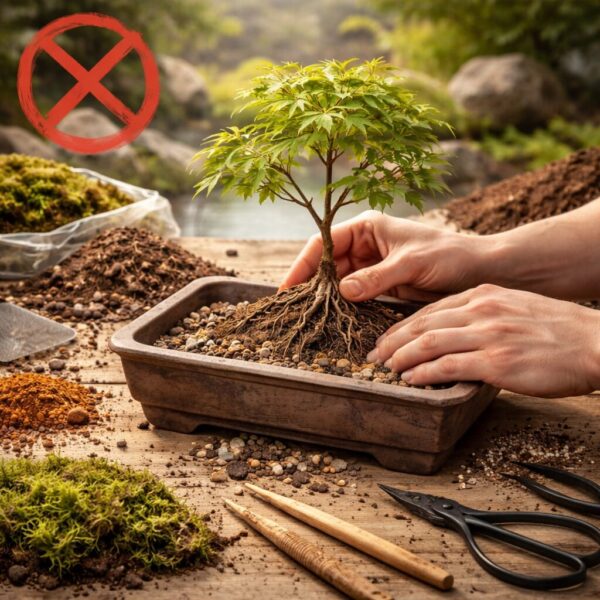
One of the biggest beginner mistakes is planting a small nursery plant straight into a bonsai pot. A bonsai pot is meant for a tree that already has a thick trunk, mature roots, and a stable structure. When a young plant is placed in a small bonsai pot, the roots stay restricted, and the tree struggles to gain strength or grow properly.
Solution: Use a bigger training pot for 1–3 years before shifting into a bonsai pot.
2. Using a Bonsai Pot Without Proper Drainage
Many beginners buy decorative bonsai pots without checking the drainage holes. Bonsai roots cannot survive in standing water, and without proper drainage, water stays trapped inside the pot. This creates the perfect environment for root rot, fungus, and weak growth. A bonsai might look fine for a few weeks, but the roots may already be dying under the surface.
Solution: Always use a pot with at least one large drainage hole, preferably two.
3. Using Normal Garden Soil
Garden soil is too heavy and holds too much water, which makes it unsuitable for bonsai. Over time, it becomes compact and blocks airflow to the roots. Bonsai trees need oxygen around their roots to stay healthy, and compact soil prevents that. This can lead to slow growth, yellowing leaves, and weak roots that cannot support the tree properly in the long run.
Solution: Use a bonsai mix like akadama, pumice, lava rock, coco chips, or perlite.
4. Overwatering Every Day
The main cause of beginning bonsai loss is overwatering. The roots of bonsai pots remain wet for longer than you might think, especially if the soil retains moisture. Fungal development, leaf drop, and root rot might result from everyday watering. Many novices believe that because bonsai pots are small, they require daily watering, but in actuality, soil dryness determines the frequency of watering.
Solution: Water only when the topsoil feels slightly dry.
5. Underwatering During Hot Weather
On the other side, many beginners forget that bonsai dries faster than regular pots. In summer, the soil can dry out within hours, especially in strong sun and wind. If you miss watering even once during extreme heat, the tree can lose leaves quickly and become stressed. Underwatering repeatedly weakens the tree and makes it more vulnerable to pests and disease.
Solution: Check moisture twice daily in summer and water as needed.
6. Keeping Bonsai Indoors Permanently
Many people think bonsai is a “table plant”, but most bonsai species are outdoor trees. Keeping them indoors reduces sunlight, airflow, and growth. Over time, the tree becomes weak, and leaves start falling. Indoor air is also dry and lacks the natural day-night temperature changes that outdoor trees need. Even if the tree survives, it may never grow strongly.
Solution: Keep your bonsai outside unless it’s a true indoor species.
7. Sudden Exposure to Strong Sunlight
In an attempt to speed up a tree’s growth, novices frequently shift it from shade to full sunshine right away. Leaf burn and tension may result from this. The leaves may drop abruptly, turn brown, or dry out at the edges. Quick shifts in sunshine might cause problems for even healthy bonsai. Bonsai trees require time to acclimatise, particularly if they were raised in a nursery with shade.
Solution: Increase sunlight slowly over 7–10 days.
8. Skipping the Training Pot Stage
A training pot is where your bonsai grows strong. Without this stage, your bonsai will stay thin and weak, no matter how much you prune or shape it. A bonsai pot is for refinement, not for fast growth. Many beginners want the “bonsai look” immediately, but a thick trunk and strong roots only develop through time, space, and healthy growth.
Solution: Grow in a training pot until the trunk thickens properly.
9. Pruning Too Much at Once
Pruning is important, but beginners often cut too many branches and leaves in one session. This shocks the tree and reduces its ability to photosynthesise. When too many leaves are removed, the tree loses energy and may stop growing for weeks. Some trees respond by dropping more leaves or producing weak shoots. Bonsai pruning should be gradual so the tree stays healthy and recovers well.
Solution: Prune gradually over time, not all at once.
10. Wiring Branches Too Tightly
Wiring helps shape bonsai, but if the wire is too tight, it cuts into the bark. This leaves scars that may stay for years, especially on smooth-barked trees. Beginners often use wire like a “rope”, but bonsai wire should guide the branch gently, not squeeze it. Tight wiring can also block sap flow, which weakens the branch and may cause dieback.
Solution: Wire gently and check weekly.
11. Leaving Wire on for Too Long
Even if the wiring is correct, leaving it for too long is a mistake. As the branch grows, the wire bites deeper and leaves ugly marks. This is especially common during the growing season when branches thicken quickly. Some beginners forget the wire for months, and by the time they notice, the damage is already done. Wire scars reduce the beauty of a bonsai and take years to heal.
Solution: Remove the wire as soon as it starts biting the bark.
12. Repotting at the Wrong Time
Repotting is stressful for bonsai. If you repot during extreme summer or winter, the tree may not recover properly and could die. Repotting involves disturbing the roots, which affects water absorption. If the weather is too hot, the tree dries out quickly. If it’s too cold, root recovery slows down. Timing matters a lot in bonsai repotting.
Solution: Repot in early spring when the tree is waking up.
13. Repotting Too Often
Some beginners repot every few months because they think it helps growth. But bonsai roots need time to settle and rebuild after repotting. Frequent repotting keeps the tree in a constant recovery state and prevents strong development. It can also lead to weak root systems and slow growth. A bonsai should only be repotted when it truly needs it, not just because it seems like a good idea.
Solution: Repot only when the roots fill the pot (usually every 1–3 years).
14. Cutting Too Many Roots
During repotting, beginners sometimes cut a large portion of roots. This reduces water absorption and causes sudden leaf drop. Bonsai roots are like the tree’s life support system, so removing too much at once creates major stress. Some trees may survive but become weak for months. Others may die if the root loss is too severe. Root pruning should always be controlled and careful.
Solution: Remove only 20–30% of roots, especially for beginners.
15. Not Fertilising the Bonsai
Because bonsai is in a small pot, nutrients get used up quickly. If you don’t fertilise, the tree becomes pale, slow, and weak. Many beginners focus only on watering and pruning, but fertiliser is what supports healthy leaf growth, root strength, and trunk thickening. Without nutrients, the bonsai cannot build energy reserves. Over time, the tree becomes more vulnerable to pests and disease.
Solution: Feed with mild fertiliser every 2–3 weeks during the growing season.
16. Over-Fertilising
Over-fertilising is just as dangerous. Too much fertiliser burns roots, damages leaves, and can cause salt buildup in the soil. Beginners often think “more fertiliser = faster growth”, but bonsai is different because it lives in a small pot. Strong fertiliser can shock the tree and cause leaf burn. Salt buildup also reduces water absorption and affects root health. Fertiliser should always be balanced and controlled.
Solution: Use diluted fertiliser and follow a proper schedule.
17. Covering Soil With Decorative Stones
Many beginners add decorative stones on top for looks, but this creates problems. Stones trap moisture, reduce airflow, and create fungus issues. They also make it harder to check soil dryness, which can lead to overwatering. While top dressing can be useful in some cases, heavy decorative stones are not ideal for beginner bonsai. Bonsai soil should breathe and dry evenly for best health.
Solution: Keep the soil surface open and breathable.
18. Buying Weak Nursery Plants
If you start with a weak plant, your bonsai journey becomes difficult from the beginning. Many nursery plants already have pests, poor root systems, or unhealthy soil. Some look green on top but have damaged roots inside the pot. Beginners often choose plants based only on appearance, not health. A strong bonsai project should begin with a healthy plant that has good roots and active growth.
Solution: Choose a healthy plant with strong green leaves and thick roots.
19. Ignoring Pest Problems
Because bonsai trees are small, pests can swiftly damage them. Common pests include scale insects, mealybugs, spider mites, and aphids. Beginners frequently overlook early warning indicators like small webs, sticky leaves, or spots that resemble white cotton. Pests quickly proliferate and deteriorate the bonsai if they are not dealt with. Moreover, a tree under stress draws additional bugs. One of the best habits you can form with bonsai is to check them frequently.
Solution: Treat pests early and inspect leaves once a week.
20. Expecting Fast Results
This is the most common beginner mistake. Bonsai is slow, and the beauty comes from time. A good bonsai takes years to develop, not days. Many beginners feel disappointed when the trunk doesn’t thicken quickly or the tree doesn’t look like a finished bonsai. But bonsai is a long-term art, and each season adds progress. If you enjoy the process, bonsai becomes relaxing and rewarding.
Solution: Enjoy the process and focus on small progress.
Final Thoughts
Bonsai is not difficult, but it does require correct habits. Most mistakes happen because beginners treat bonsai like a normal plant. But bonsai is different — it lives in a small pot, depends heavily on pruning, and needs careful watering. Once you learn the basics, your bonsai becomes healthier and easier to maintain. The key is patience, observation, and consistent care.
If you avoid these 20 beginner mistakes, your bonsai will grow stronger, healthier, and more beautiful over time. With each season, you’ll understand your tree better and develop confidence in your skills. Bonsai is not about perfection — it’s about progress. If you keep learning and improving, your bonsai will reward you with growth, beauty, and a peaceful gardening experience.
FAQS
1. What is The Beginner Bonsai and who is it for?
The Beginner Bonsai refers to the practice of starting bonsai cultivation with simple techniques, easy tree species, and basic tools. It is ideal for people who are new to gardening or want a calming hobby that doesn’t require advanced skills. Beginners can learn pruning, shaping, and watering at a comfortable pace without overwhelming complexity.
2. Why should beginners start with The Beginner Bonsai approach?
The Beginner Bonsai approach helps new growers avoid common mistakes by focusing on patience and foundational care. Instead of advanced wiring or rare species, beginners learn tree health, soil balance, and watering habits. This method builds confidence and understanding, making long-term bonsai success more achievable and enjoyable for newcomers.
3. Which tree species are best for The Beginner Bonsai?
Trees suitable for The Beginner Bonsai include ficus, juniper, jade, and Chinese elm. These species are hardy, forgiving, and adapt well to pruning and indoor or outdoor conditions. Their resilience allows beginners to learn shaping techniques without risking frequent plant loss, making the learning process smoother and less stressful.
4. How much time does The Beginner Bonsai require daily?
The Beginner Bonsai does not demand daily intensive care. Most days involve quick observation, while watering is done only when the soil needs it. Weekly tasks may include light pruning or rotation for even sunlight. This makes bonsai a manageable hobby even for busy individuals with limited free time.
5. Can The Beginner Bonsai be grown indoors?
Yes, The Beginner Bonsai can be grown indoors if proper light, airflow, and humidity are provided. Tropical species perform best inside homes, especially near bright windows. Beginners should avoid dark corners and ensure regular sunlight exposure to maintain healthy growth and prevent weak or leggy branches.
6. What tools are essential for The Beginner Bonsai?
The Beginner Bonsai requires only basic tools such as pruning scissors, a watering can with gentle flow, and well-draining soil. Advanced wiring tools can be added later. Starting simple reduces costs and helps beginners focus on learning tree behavior rather than relying heavily on equipment.
7. How often should watering be done in The Beginner Bonsai?
Watering in The Beginner Bonsai depends on soil dryness rather than a fixed schedule. Beginners should check moisture daily and water thoroughly when the topsoil feels slightly dry. Overwatering is a common mistake, so learning to observe the tree’s needs is more important than frequent watering.
8. What mistakes should beginners avoid in The Beginner Bonsai?
Common mistakes in The Beginner Bonsai include overwatering, excessive pruning, and placing trees in low light. Beginners may also rush shaping techniques. Patience is key, as bonsai development takes time. Avoiding sudden changes helps trees adjust naturally and remain healthy.
9. Is pruning difficult in The Beginner Bonsai?
Pruning in The Beginner Bonsai is simple when done gradually. Beginners start by removing dead or overgrown branches to maintain shape and health. Learning when and where to cut improves with practice. Controlled pruning encourages balanced growth without stressing the tree unnecessarily.
10. How long does it take to see results in The Beginner Bonsai?
Visible progress in The Beginner Bonsai can be seen within a few months, especially in leaf density and branch structure. However, true bonsai beauty develops over years. Beginners should enjoy small improvements and understand that bonsai is a long-term, rewarding journey.
11. What soil is best for The Beginner Bonsai?
The Beginner Bonsai requires fast-draining soil that prevents root rot. A mix of akadama, pumice, or coarse sand works well. Good soil allows air circulation around roots and supports healthy growth, making maintenance easier for beginners learning proper watering habits.
12. Can children learn The Beginner Bonsai?
Children can use the Beginner Bonsai as long as they are supervised. It instills patience, accountability, and a love of the natural world. It’s soothing and instructive, with simple activities like watering and monitoring growth. Selecting resilient tree species guarantees a fruitful educational experience free from frequent plant damage.
13. Does The Beginner Bonsai require fertilizer?
The Beginner Bonsai benefits from light fertilization during the growing season. Beginners should use mild, balanced fertilizer once or twice a month. Overfertilizing can harm roots, so moderation is essential. Fertilizer supports healthy leaves and steady growth without forcing rapid development.
14. Can The Beginner Bonsai survive different climates?
The Beginner Bonsai can adapt to various climates depending on tree species. Tropical bonsai thrive in warm regions, while temperate species prefer outdoor seasonal changes. Beginners should select trees suited to their local environment to reduce stress and simplify long-term care.
15. How important is sunlight in The Beginner Bonsai?
Sunlight is crucial in The Beginner Bonsai for strong growth and healthy leaves. Most species need several hours of bright light daily. Insufficient sunlight can weaken branches and reduce leaf size. Beginners should adjust placement gradually to avoid sunburn or shock.
16. What pot size is ideal for The Beginner Bonsai?
The Beginner Bonsai uses pots that restrict root growth while allowing drainage. Beginners should avoid very small pots initially, as they dry out quickly. Slightly larger containers provide stability and help learners manage watering more effectively during early stages.
17. Is wiring necessary in The Beginner Bonsai?
Wiring is optional in The Beginner Bonsai and not required immediately. Beginners can focus on pruning and natural shaping first. Once comfortable, gentle wiring helps guide branch direction. Learning slowly prevents damage and builds confidence in tree styling techniques.
18. How does The Beginner Bonsai help reduce stress?
The Beginner Bonsai promotes mindfulness through observation and gentle care. Spending time with trees encourages relaxation and patience. The slow pace of growth teaches acceptance and focus, making bonsai an excellent hobby for mental well-being and stress relief.
19. Can mistakes be fixed in The Beginner Bonsai?
Most mistakes in The Beginner Bonsai are fixable with proper care and patience. Trees are resilient and often recover from over-pruning or watering issues. Learning from errors is part of the journey, helping beginners improve skills and understanding over time.
20. Is The Beginner Bonsai suitable for long-term practice?
The Beginner Bonsai is not just a starting phase but a foundation for lifelong bonsai cultivation. Skills learned early continue to apply as techniques advance. Beginners who master basics enjoy healthier trees and greater creative freedom in future bonsai projects.