Feel free to share!
Bonsai trees are more than just miniature plants; they are living art forms that carry deep cultural and spiritual significance. From ancient Japanese traditions to modern home décor, these tiny trees have fascinated people for centuries, offering a sense of tranquility, patience, and harmony with nature.
Table of Contents 👈 Tap Here
Bonsai Tree Symbolism: 20 Best Meanings of Common Varieties reveals the unique meanings behind different types of bonsai, helping enthusiasts and gardeners connect with their plants on a deeper level. Each variety carries its own story, representing qualities like resilience, prosperity, love, and longevity, making the practice of growing bonsai a journey of both beauty and personal reflection.
The Art of Bonsai: History and Philosophy
The word bonsai comes from Japanese, meaning “planted in a container.” While closely tied to Japanese culture, its origins go back more than 2,000 years to ancient China, where it was known as penjing. Japanese monks later refined the art, inspired by Zen principles of simplicity and balance. Bonsai today is seen as living art, embodying patience, mindfulness, and natural beauty.
Bonsai trees are not genetically dwarfed plants but full-sized trees carefully pruned and shaped to remain miniature while resembling their larger counterparts. Every detail, from root to branch, is guided by careful techniques to reflect proportion and harmony. This balance between human creativity and natural growth makes bonsai both a horticultural craft and a spiritual journey, one admired worldwide for its unique discipline and beauty.
Caring for Bonsai Trees
Successfully growing a bonsai tree begins with choosing the right species for your climate and environment. Some varieties are hardy outdoor bonsai, while others thrive better indoors. After selecting your tree, you must pay attention to pruning, wiring, repotting, and watering. Each action shapes the tree’s growth, while also teaching patience and discipline. The key is to encourage beauty without forcing unnatural shapes.
Caring for bonsai can be a meditative experience. It requires mindfulness, observation, and a steady hand. Over time, tending to bonsai cultivates focus and serenity, offering mental health benefits such as reduced stress and improved concentration. Many enthusiasts consider their bonsai as companions, watching them grow slowly over decades. Because of this longevity, bonsai often become family heirlooms, passed down as living works of art.
What Do Bonsai Trees Represent?
Bonsai trees are widely believed to bring good luck, peace, and harmony into the home. However, each tree species carries its own unique symbolism, deeply rooted in cultural traditions, spiritual practices, and in some cases, feng shui beliefs. By choosing a bonsai that aligns with personal values or intentions, you can bring specific energies into your life. Let’s explore the meanings of popular bonsai varieties.
1. Azalea Bonsai – Symbol of Femininity and Abundance
The Azalea bonsai is admired for its stunning flowers, blooming in bright pink, red, or white shades. This bonsai is often seen as a symbol of feminine beauty, gentleness, and vulnerability. It also represents abundance, love, and passion, making it a meaningful gift for women. Despite its miniature size, Azalea flowers bloom in their natural full size, creating a striking contrast of strength and delicacy.
2. Ficus Bonsai – Cheerful Energy and New Beginnings
The Ficus bonsai is often called the “cheerful tree” because of its reputation for bringing positivity and harmony to its surroundings. It symbolizes unity, simplicity, and new beginnings, making it a popular bonsai for homes and offices. Many believe that having a Ficus indoors helps to lift moods, spread positivity, and foster understanding between people, giving it a strong cultural and symbolic significance.
3. Jade Bonsai – Prosperity and Friendship
The Jade bonsai is one of the most beloved bonsai trees in feng shui traditions, where it is often associated with wealth, prosperity, and friendship. Its lush green leaves symbolize growth, renewal, and positive energy. Commonly known as the “money tree,” Jade bonsai is frequently gifted to business owners, as placing it near an entrance or register is believed to attract financial success and abundance.
4. Juniper Bonsai – Strength and Protection
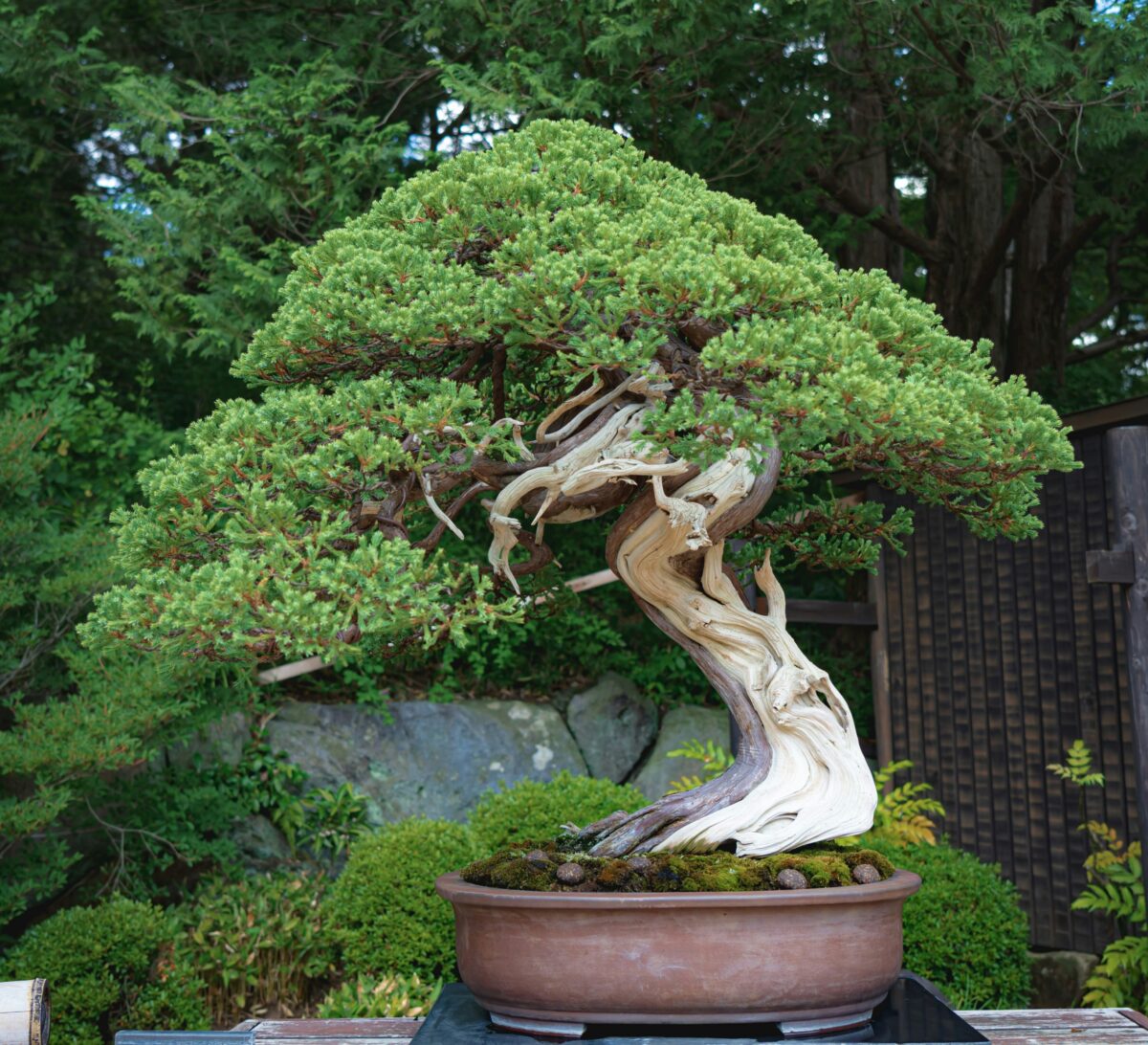
The Juniper bonsai, an evergreen with strong resilience, symbolizes protection, strength, and purification. This long-living species is believed to ward off negative energy and evil spirits, making it both a spiritual and ornamental tree. Its symbolic strength comes from its ability to survive harsh conditions, representing endurance and the power to overcome challenges. Juniper bonsai is often seen as a guardian, offering balance and spiritual cleansing.
5. Cherry Blossom Bonsai – Renewal and Mindfulness
The Cherry Blossom bonsai holds deep cultural significance in Japan, where the cherry blossom is the national flower. Its delicate pink flowers bloom for only a short period, symbolizing mindfulness, mortality, and the fleeting beauty of life. For many, it serves as a reminder to appreciate the present moment. This bonsai also represents renewal, rebirth, and feminine beauty, often celebrated during Japan’s famous spring blossom festivals.
6. Chinese Elm Bonsai – Harmony and Wisdom
The Chinese Elm bonsai is often called the “tree of harmony” because of its associations with intuition, wisdom, and love. It is believed to have protective qualities and is sometimes planted near homes as a good omen. With its graceful growth and adaptability, the Chinese Elm has become a favorite among bonsai lovers, not only for its beauty but also for the balance and wisdom it symbolizes.
7. Maple Bonsai – Peace and Serenity
The Japanese Maple bonsai, famous for its seasonal foliage, represents peace, balance, and calm. In autumn, its leaves turn brilliant shades of red, orange, and yellow, symbolizing the beauty of change and impermanence. For centuries, maples have been celebrated in Japanese art and poetry as representations of elegance. As a bonsai, the Maple invites serenity and reflection, making it an ideal tree for creating peaceful spaces.
8. Cedar Bonsai – Immortality and Healing
The Cedar bonsai is admired for its symbolic associations with strength, immortality, and healing. Traditionally, cedar has been used in rituals, medicine, and purification ceremonies, giving it a sacred place in many cultures. Its durability and longevity make it a strong representation of endurance and resilience. As a bonsai, Cedar carries not only aesthetic appeal but also a spiritual meaning of protection, cleansing, and timeless life force.
9. Oak Bonsai – Wisdom and Longevity
The Oak bonsai, with its powerful trunk and long lifespan, is a tree of knowledge and strength. In mythology and tradition, oaks have been associated with gods, wisdom, and eternal life. As a bonsai, the oak’s rugged bark and enduring nature make it a powerful symbol of loyalty, longevity, and resilience. It is often admired as a representation of spiritual wisdom passed down across generations.
Bonsai trees are far more than miniature plants; they are living symbols of culture, philosophy, and human connection with nature. Each variety carries its own story, from the protective power of Juniper to the financial fortune of Jade. Choosing a bonsai for yourself or as a gift means inviting not only beauty into a space but also meaningful energy, patience, and harmony.
Tradition even holds that gifting a bonsai doubles the fortune it brings to the recipient, making it a thoughtful and symbolic present. Whether you’re drawn to the elegance of a Maple, the positivity of a Ficus, or the serenity of a Cherry Blossom, bonsai trees embody the perfect balance between art and nature—reminding us to slow down, nurture, and live in harmony with the world around us.
FAQs on Bonsai Tree Symbolism
1. What is the meaning of Bonsai Tree Symbolism?
Bonsai Tree Symbolism represents patience, harmony, and balance in nature. Each bonsai tree is carefully nurtured and shaped, symbolizing human perseverance and respect for life. Bonsai Tree Symbolism often reflects inner peace and spiritual growth, making these miniature trees a perfect representation of mindfulness and the connection between humans and nature.
2. How does Bonsai Tree Symbolism differ between tree types?
Bonsai Tree Symbolism can vary depending on the species. For example, pine bonsai represents longevity, while cherry blossom bonsai represents beauty and renewal. Each type carries unique meanings, and the Bonsai Tree Symbolism can change according to cultural context, artistic expression, and personal interpretation, making every bonsai a distinct symbol of values and emotions.
3. Why is Bonsai Tree Symbolism important in Japanese culture?
In Japanese culture, Bonsai Tree Symbolism reflects a deep respect for nature and aesthetics. It symbolizes harmony, patience, and spiritual reflection. Bonsai Tree Symbolism is seen in homes, gardens, and temples, where it encourages mindfulness and appreciation of life’s details. This cultural symbolism emphasizes the balance between human effort and natural growth.
4. Can Bonsai Tree Symbolism influence home décor choices?
Yes, Bonsai Tree Symbolism is often used in home décor to convey elegance, tranquility, and harmony. Placing bonsai in a living space can bring a sense of calm and positive energy. Understanding Bonsai Tree Symbolism allows homeowners to select trees that match desired feelings, making interior spaces both beautiful and spiritually meaningful.
5. How do I choose a bonsai tree based on Bonsai Tree Symbolism?
To choose a bonsai based on Bonsai Tree Symbolism, consider the traits you want to emphasize. For example, pine trees symbolize resilience, while maples symbolize balance and beauty. Knowing the Bonsai Tree Symbolism helps you select a tree that aligns with personal or spiritual goals, ensuring the tree is both decorative and meaningful.
6. What spiritual lessons can Bonsai Tree Symbolism teach?
Bonsai Tree Symbolism teaches patience, persistence, and respect for nature. Cultivating a bonsai requires care and dedication, reflecting the values of mindfulness and self-discipline. Bonsai Tree Symbolism encourages reflection on life’s journey and the beauty of gradual growth, reminding us that harmony and balance are cultivated over time through careful effort.
7. Is Bonsai Tree Symbolism different in Western culture?
While Bonsai Tree Symbolism originates from Asia, it has been embraced in Western culture for aesthetic and meditative purposes. Western interpretations often focus on beauty, creativity, and relaxation. Bonsai Tree Symbolism may be seen more as an art form, but the underlying messages of patience and harmony remain universal, bridging cultural perspectives beautifully.
8. How does Bonsai Tree Symbolism relate to meditation?
Bonsai Tree Symbolism is closely connected to meditation and mindfulness. Caring for a bonsai encourages focus, patience, and inner calm. Bonsai Tree Symbolism represents the meditative practice of shaping life intentionally, teaching us to observe growth slowly and mindfully. Each pruning and arrangement reinforces harmony between mind, body, and nature.
9. Can Bonsai Tree Symbolism influence personal growth?
Yes, Bonsai Tree Symbolism can inspire personal growth by highlighting patience, discipline, and resilience. Nurturing a bonsai requires consistent effort, reflecting the journey of self-improvement. Bonsai Tree Symbolism reminds us that meaningful change is gradual and deliberate, encouraging reflection, mindfulness, and respect for the natural flow of life.
10. How do bonsai trees convey Bonsai Tree Symbolism visually?
Bonsai trees convey Bonsai Tree Symbolism through shape, size, and arrangement. Twisted branches can symbolize resilience, and miniature landscapes evoke balance and harmony. Bonsai Tree Symbolism is expressed visually by the care and artistry involved, allowing the observer to connect emotionally and spiritually with the miniature tree and its deeper cultural significance.
11. What are the most common symbols in Bonsai Tree Symbolism?
Common symbols in Bonsai Tree Symbolism include longevity, balance, harmony, patience, and resilience. Pine, juniper, and maple trees often carry specific meanings. Bonsai Tree Symbolism uses the miniature form to reflect life’s principles, allowing the tree to serve as a living reminder of inner peace, beauty, and the importance of nurturing growth over time.
12. How is Bonsai Tree Symbolism reflected in bonsai competitions?
In bonsai competitions, Bonsai Tree Symbolism is expressed through artistry, design, and tree health. Judges look for harmony, balance, and the visual storytelling of the tree. Bonsai Tree Symbolism in competitions emphasizes not only technical skill but also the cultural and spiritual values each tree represents, making it a symbol of both creativity and tradition.
13. Can Bonsai Tree Symbolism be used in gifting?
Absolutely. Bonsai Tree Symbolism makes these trees meaningful gifts, representing peace, patience, and longevity. Giving a bonsai conveys thoughtful intentions and spiritual connection. Bonsai Tree Symbolism adds emotional value to the gift, turning it into a lasting reminder of care, mindfulness, and the symbolic beauty of life.
14. Does Bonsai Tree Symbolism change over time?
Yes, Bonsai Tree Symbolism can evolve as the tree grows and as personal interpretations develop. While traditional meanings remain, individual experiences can deepen the symbolic significance. Bonsai Tree Symbolism grows alongside the tree, reflecting personal journey, spiritual insight, and the changing understanding of harmony, patience, and natural beauty over time.
15. How can I learn more about Bonsai Tree Symbolism?
Learning about Bonsai Tree Symbolism involves studying bonsai care, history, and cultural traditions. Books, online resources, and bonsai clubs provide guidance. By observing and nurturing bonsai, you gain firsthand understanding of Bonsai Tree Symbolism, experiencing its lessons in patience, balance, and harmony, and appreciating the deep connection between humans and nature.