
Feel free to share!
Table of Contents 👈 Tap Here
The juniper Nana Bonsai is one of the most captivating miniature trees you can grow. with its dense green needles, rugged bark, and natural. Windswept appearance, it brings
a touch of ancient beauty into your modern spaces. But many bonsai beginners often feel frustrated when
Their tree doesn’t thrive as expected. why do some Juniper nanas
grow lush and full while others stay.
Scraggly or even dieback? In this post you will learn the real secret behind stunning bonsai growth and how you can apply it step by step to transform your Juniper into a showstopper.
Juniper Nanas bonsai
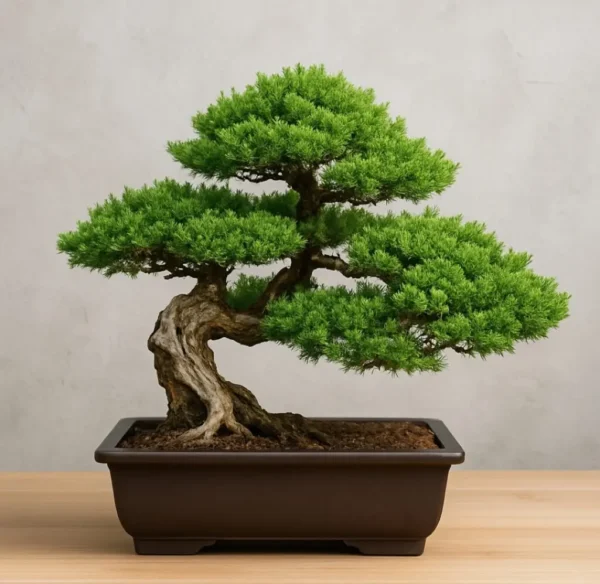
1. Juniper bonsai overview
Juniper Nanas is a dwarf variety of junipers procumbens prized for its low-growing, compact, naturally formed dense green foliage and works beautifully for training into classic bonsai styles like cascade and informal upright. This bonsai is ideal.
for both beginners and experienced
hobbyists because it’s hardy, tolerant of shaping, and extremely
Rewarding. When given the right care, growth habits stay close to the soil. Giving it an ancient rugged look that perfectly mimics a tree in the wild.
Tip: Always place your bonsai where it gets at least 4 to 6 hours of sun.
2. The secret revealed: Balance sunlight + root health
Here’s the real secret to a stunning
Juniper nana bonsai: it’s not just
about trimming the top. about
balancing sunlight and root health
together. Many people focus only on
Watering and shaping the foliage , but it the roots that do the real work .
Without a strong, healthy root system
Your bonsai can’t absorb nutrients
Or handle stress low. If your bonsai
gets bright indirect light and well-maintained roots; you will see vigorous
Compact growth in no time
Tip : Never let roots soggy _ juniper hate wet foot.
3: Choosing the right soil mix
Soil is more than simply dirt; it is your Bonsai life. The ideal mixture
For Juniper Nana, it consists of about
30% organic material (such as pine
Bark) and 70% inorganic materials
(such as pumice, akadama, or larva)
Rock). This produces the ideal ratio.
Of drainage to water retention. Rot
Can result from the roots being suffocated by dense or clay-based soil. Conversely too much pest or sand dries out to quickly . A good bonsai soil mix is an investment that
Will give your tree the space it needs.
to breath and flourish.
Tip: Place mesh over drainage holes.
In your Bonsai pot to prevent soil from washing out during watering
4. Watering: the Precision Routine
Watering the Juniper nana bonsai is more of an art than a routine. Don’t rely on a set schedule. Instead touch
the soil surface of the soil daily. Water thoroughly only when the top
Inch feels dry. This encourages the roots to grow deep and strong, rather
Than staying shallow and weak. During summer, water in the early morning so the roots absorb it before the day heats up. In winter, reduce watering as the tree goes semi-dormant, but never let it completely dry out.
Tip: In summer, water deeply in the morning. In winter, reduce frequency.
5. Pruning Techniques for Dense Foliage
Pruning is key to creating that lush
Cloud _ like canopy you see in expert
bonsai display. Use sharp, sterile
Shears to trim back overlong
Shoots and creates a compact, balanced shape. To promote new growth in desired direction always
Prune slightly above a healthy leaf
Node: Avoid cutting too much at once, especially in the late summer or fall. If you over prune or snip during dormancy you may stress the plant
Or cause browsing regular light
Pruning throughout the growing
Season keeps them in shape, tight and attractive.
Tip: Always prune with sharp, sterile
Scissors to avoid disease.
6. Wiring sculpture for bonsai safety
With the use of wiring, you can gradually mold your Juniper nana bonsai into a beautiful shape. Gently
Warp soft aluminum wire over the branches you want to bend. When
The snap flow is less, and the branches are more pliable. Do this in
Late winter or early spring . You risk
damaging the bark if you warp too
tightly. For several months , Keep
the wire once the branch has stabilized in its new location.
Caution: Check wires regularly to prevent deep scarring on the branches.
7. Fertilizing for Power Growth
Feeding your Juniper nana bonsai with the right ferterlizer makes a big difference in foliage colour and overall strength . A balance formula
Such as 10 10 10 or 14 14 14 works well. Apply during the growing season every two weeks, depending
On the product. You can use slow
Release pellets or dilute liquid feed.
To boost growth even more, add a bit.
Ok seaweed extract of fish emulsion
Once a month. These organic boosters strengthen roots and increase resistance to pests.
Secret add-on: add seaweed extract.
Monthly for extra lushness and vigor.
9. Seasonal Care Tips
Juniper nana bonsai needs slightly
different in each season . In spring
Reporting and light wiring are ideal
Summer requires regular watering
and some protection from intense
Afternoon heat. In the fall, fertilization should be discontinued.
To allow the tree to get ready for winter.
hibernation. During winter, your
bonsai will enter a dormancy phase .
Protect it from frost if the temperature
drops below freezing by moving
It is a cold frame unheated garage.
Or simply wrapping the pot.
Winter Tip: Move to a sheltered area or mulch to protect the root zones.
10: Repotting for long-term health
Repotting prevents the roots from
becoming root bond and encourage
Fresh, virgorours growth .for young Juniper nana bonsai do this every
2 3 years . For older trees, every 45 years is enough. Signs that it is time to
Include slow. Growth water sitting on the surface or roots growing out of the drainage holes. When Repotting
Trim one third of the root ball and replace it with fresh soil. Always water thoroughly afterwards and avoid direct
Sun for a few days while it recovers.
Root secret: Trim 1/3 of the root ball to stimulate strong new growth.
Final thoughts
Juniper nana bonsai may be a small tree, but the results of proper care are nothing short of stunning. The real secret lies in a healthy balance between sunlight and strong roots; everything else builds from there. with the right soil, watering routine, pruning method, and seasonal adjustment
Your bonsai will thrive for years to come. Be patient and stay consistent.
And soon your Juniper will be the centerpiece of your garden or windowsill. Best of luck. Happy gardening!
FAQS
1. What is a Juniper Nanas bonsai?
A Juniper Nanas bonsai is a compact evergreen bonsai variety prized for its dense foliage and rugged, natural appearance. It is a dwarf juniper species that adapts well to bonsai training, making it popular among beginners and experienced growers alike. Its needle-like leaves, strong trunk structure, and resilience allow it to thrive in various climates with proper care.
2. Is Juniper Nanas bonsai suitable for beginners?
Yes, Juniper Nanas bonsai is considered one of the best choices for beginners due to its hardy nature and forgiving growth habits. It tolerates minor watering mistakes, responds well to pruning, and can survive outdoor conditions year-round. With basic sunlight, airflow, and seasonal maintenance, new growers can successfully shape and maintain this bonsai without advanced techniques.
3. Where should Juniper Nanas bonsai be placed?
Juniper Nanas bonsai should always be kept outdoors, as it requires natural sunlight and seasonal temperature changes to remain healthy. Placing it in a spot that receives at least four to six hours of direct sunlight daily helps maintain dense foliage and strong growth. Indoor placement can weaken the tree and eventually cause decline due to poor airflow and light.
4. How often should Juniper Nanas bonsai be watered?
Although the Juniper Nanas bonsai enjoys slightly damp soil, it should never be left in wet conditions. Water only when the soil’s top layer is palpably dry. Underwatering results in dry foliage, while overwatering might lead to root rot. Long-term health depends on appropriate drainage, well-draining bonsai soil, and monitoring seasonal water requirements.
5. What type of soil is best for Juniper Nanas bonsai?
The ideal soil for Juniper Nana bonsai is a fast-draining bonsai mix that allows oxygen to reach the roots. A combination of akadama, pumice, and lava rock is commonly used to balance moisture retention and drainage. Good soil prevents root rot, encourages healthy root development, and supports stable growth throughout the year.
6. Does Juniper Nanas bonsai need pruning?
Regular pruning is essential for Juniper Nanas bonsai to maintain its shape and encourage compact growth. Trimming excess shoots helps direct energy to inner branches and improves airflow. However, pinching foliage incorrectly can damage growth, so sharp tools and proper pruning methods should be used to preserve the tree’s natural structure.
7. When should Juniper Nanas bonsai be repotted?
Juniper Nanas bonsai is typically repotted every two to three years, preferably in early spring before active growth begins. Repotting refreshes the soil, prevents root binding, and promotes healthier development. Root pruning should be done carefully to avoid stress, and the tree should be protected from extreme conditions after repotting.
8. Can Juniper Nanas bonsai survive winter?
Yes, Juniper Nanas bonsai is cold-hardy and requires winter dormancy to stay healthy. It can withstand frost but should be protected from extreme freezing temperatures and harsh winds. Placing it in a sheltered outdoor area or cold frame helps maintain proper dormancy without exposing the roots to severe cold damage.
9. How fast does Juniper Nanas bonsai grow?
Juniper Nana’s bonsai has a slow to moderate growth rate, which makes it easier to maintain its shape. Growth speed depends on sunlight, watering, fertilisation, and seasonal conditions. While it doesn’t grow rapidly, consistent care allows gradual trunk thickening and refined branching over time.
10. What fertilisers are best for Juniperus Nana bonsai?
Balanced bonsai fertilizers work well for Juniper Nanas bonsai during the growing season. Organic pellets or liquid fertilisers with equal nitrogen, phosphorus, and potassium support steady growth. Fertilising should be reduced in extreme heat and stopped during winter dormancy to prevent unnecessary stress on the tree.
11. Can Juniper Nanas bonsai be grown indoors temporarily?
Juniper Nana’s bonsai can be kept indoors briefly for display purposes, but long-term indoor placement is not recommended. Lack of sunlight, poor airflow, and stable indoor temperatures disrupt its natural growth cycle. After short indoor displays, it should be returned outdoors to recover and maintain vigour.
12. How do you wire Juniper Nana’s bonsai safely?
Wiring Juniper Nanas bonsai allows shaping branches into elegant forms, but it must be done carefully. Aluminium wire is commonly used, and branches should be wrapped gently to avoid bark damage. Regular checks are necessary, as wires can cut into the bark if left on too long during active growth periods.
13. Why is Juniper Nana’s bonsai foliage turning brown?
Browning foliage on Juniper Nanas bonsai can result from improper watering, poor drainage, lack of sunlight, or environmental stress. Seasonal needle drop is normal, but widespread browning indicates a care issue. Adjusting watering habits, improving light exposure, and ensuring good airflow often resolves the problem.
14. How long can Juniper Nanas bonsai live?
With proper care, Juniper Nanas bonsai can live for decades and even be passed down through generations. Consistent watering, pruning, repotting, and seasonal protection contribute to its longevity. Its natural resilience makes it one of the longest-living bonsai species when maintained correctly.
15. Is Juniper Nanas bonsai good for outdoor gardens?
The Juniper Nanas bonsai grows best in outdoor spaces with natural light and ventilation, such as balconies, terraces, and gardens. Placing it outside enhances the density of vegetation and fortifies its structure. This bonsai relies on outside circumstances to finish its normal development and dormancy cycles, in contrast to indoor plants.
16. Can pests affect Juniper Nanas bonsai?
Like all bonsai trees, Juniper Nanas bonsai can occasionally attract pests such as spider mites or aphids. Regular inspection helps detect issues early. Maintaining good airflow, avoiding overwatering, and using appropriate bonsai-safe treatments can prevent infestations from becoming severe.
17. How much sunlight does Juniper Nanas bonsai need?
Juniper Nanas bonsai requires bright sunlight for healthy growth and compact foliage. Ideally, it should receive several hours of direct sunlight daily. Insufficient light can cause weak growth, sparse foliage, and reduced overall vigour, making sunlight one of the most important care factors.
18. Can Juniper Nanas bonsai be styled in different forms?
Juniper Nanas bonsai is highly versatile and can be styled in various traditional bonsai forms, including informal upright, cascade, and semi-cascade. Its flexible branches and strong trunk structure make it ideal for creative styling. Proper wiring and pruning over time help achieve refined, natural-looking designs.
19. What mistakes should be avoided with Juniper Nanas bonsai?
Common mistakes include keeping Juniper Nanas bonsai indoors, overwatering, and skipping winter dormancy. These errors weaken the tree and may cause long-term damage. Understanding its outdoor nature and seasonal needs is essential for maintaining a healthy and visually appealing bonsai.
20. Why is Juniper Nanas bonsai so popular?
Juniper Nanas bonsai is popular because it combines durability, beauty, and ease of care. Its ability to withstand pruning, wiring, and varying climates makes it ideal for bonsai enthusiasts at all skill levels. The tree’s timeless appearance and long lifespan further add to its widespread appeal.